- The Runway Ventures
- Posts
- 🤯 CXA’s Rise and Fall: Why a $58M Asian Insurtech Startup Failed
🤯 CXA’s Rise and Fall: Why a $58M Asian Insurtech Startup Failed
How running two businesses quietly pushed CXA to shut down just before break-even

Admond Lee
January 11, 2026

P.S. Brands like Notion, Airwallex, Deel, and Intercom sponsor The Runway Ventures to reach founders who actually convert.
Hey Founders,
Welcome to The Runway Ventures — a weekly newsletter where I deep dive into failed startup stories to help you become the top 1% founder by learning from their mistakes with actionable insights.
Today’s story is about CXA — a bold insurtech startup that set out to reinvent corporate health benefits, scaled too many things at once, and quietly unraveled despite a powerful vision. Let’s get to it! 🚀
Today at a Glance:
☠️ 1 Failed Startup → CXA
⚠️ 2 Mistakes → Trying to scale a brokerage and a SaaS platform at the same time
🧠 3 Lessons Learned → Growth narratives don’t pay for burn — unit economics do
🔗 The Runway Insights → How Base44 was bootstrapped and sold for $80M in 9 months
💰 Southeast Asia Funding Radar → Manus was acquired by Meta for more than $2B
☠️ 1 Failed Startup: CXA

🚀 The Rise of CXA
🇸🇬 Founded by Rosaline Chow Koo in 2013, CXA built a digital platform to modernise corporate health benefits, helping companies personalise insurance and wellness spend instead of relying on rigid, paper-based plans.
🕺🏻 Founders’ Story
😖 Rosaline Chow Koo didn’t start CXA because she wanted to be a founder — she started it because she was fed up.
After decades of running employee benefits across Asia, she saw companies spending more while employees got sicker, and the industry refusing to change.
🤯 When her ideas were rejected internally, she walked away, put $5M of her own savings plus $5M in debt on the line, and started CXA out of her living room in Singapore in 2013.
It was a bet driven by conviction, not comfort.
Her personal goal? Build a unicorn before the age of 60.
The Problem — 🧑🏻💼 Corporate health benefits were broken.
Companies paid rising insurance premiums
HR teams dealt with heavy admin
Employees were stuck with rigid plans they didn’t actually need — while overall workforce health kept getting worse.
The Solution — 🫶🏻 CXA replaced one-size-fits-all insurance with a digital benefits platform and wallet by:
Letting employees personalise how their benefits budget was spent (insurance, screenings, wellness).
Giving employers data to manage costs and shift spending from treatment to prevention.
🏥🩺 In short, CXA was like a super app for employee benefits that plugs into clinics, screenings, tele-health, wellness providers, and insurers.

CXA Platform
 | From day one, Rosaline hustled hard and it paid off quickly. 🔥 When CXA launched, she amazingly landed 3 Fortune 500 companies as the first clients (tech, finance, and manufacturing sectors). With the early traction, Rosaline went on a bold move… |
🤝🏻 She acquired Singapore’s largest local employee benefits brokerage firm (called Pan) to get brokerage licenses and instant distribution.
The masterplan? CXA became this hybrid of an insurance broker and a cutting-edge benefits tech provider, letting companies offer flexible health and wellness perks to their staff via one-stop software.
🏔️ By 2019, CXA was unstoppable:
Raised a total of $58 million from top investors (EDBI, B Capital, MDI Ventures etc.)
Onboarded over 600 enterprise clients (including Fortune 500s)
Serving 400,000+ employees across 20 countries
Grew revenue by 50% annually (target to breakeven in the first half of 2021)
Expanded across China, Hong Kong and Southeast Asia
It seemed like the sky was the limit for Rosaline and her company at that peak…
Big clients, big investors, big plans.
📉 The Fall of CXA
But CXA didn’t “die” in one dramatic explosion.
It was more like… a long, expensive fight where the company slowly had to sell pieces of itself to survive.
📌 Here’s what happened to CXA:

🏥 The pioneer of insurtech in Asia

2013 – CXA Group was founded in Singapore by Rosaline Chow Koo, who invested about S$10M of her own (savings and loans) after leaving Mercer to create an AI-driven employee benefits platform.
2013 – 🤑 Launched with 3 Fortune 500 companies as first clients, proving early demand.
Then, CXA acquired Pan Resources (Singapore’s largest employee benefits broker) to obtain an insurance brokerage license and jump-start the business.
Mar 2015 – 💰 Raised $8 million (Series A) to expand operations. CXA’s model of digitising employee health benefits began drawing investor interest.
Feb 2017 – 💰 Raised $25M (Series B) led by B Capital and EDBI, bringing total funding to ~$33M.
Facebook co-founder Eduardo Saverin joined the board. At this point, CXA was valued at around $100M and operates in Singapore and Hong Kong, with plans to expand across Asia.
2018 – 🇨🇳 Expanded into China by:
forming a partnership with Fosun and Howden to enter 20 cities
acquiring Shanghai and Beijing brokerage licenses
buying Medi-Plus, a Chinese health check-up network
CXA served hundreds of corporate clients and won industry awards, becoming a regional insurtech darling.
Mar 2019 – 💰 Secured a $25M (convertible note bridge round) from strategic investors including HSBC, Singtel Innov8, Telkom Indonesia, Sumitomo, and Humanica to fund its next expansion phase.
This brought total funding to over $58M.
The focus shifted to a new SaaS platform for banks/insurers, and a tech development hub is established in Vietnam.
😢 Getting to profitability…

Mar 2020 – 🫵🏻 Under profitability pressure, CXA laid off 12 employees (out of ~300) in Singapore to cut costs, as investors demanded a clear path to break-even.
Revenue had grown 50% in 2019, but losses remained significant.
Plans were set to reach profitability by 1H 2021.
Feb 2021 – 🤝🏻 Pacific Prime acquired CXA’s brokerage arms in Singapore and Hong Kong.
CXA pivoted entirely to a cloud software (SaaS) model, providing its benefits platform to insurers, banks, and HR platforms.
The company claimed 45% overall revenue growth in 2020 and booming usage of its digital platform during COVID-19.
Apr 2021 — ⚠️🇻🇳 Shut down its Vietnam tech hub and fired all its 70 employees.
2022 – CXA operated as a pure tech platform business.
Despite some partnership deals (e.g. white-labeling the CXA platform for HSBC Life and other insurers), the company struggled to generate sustainable revenue and continued burning cash.
🚨 Attempts to raise a new funding round amid a venture capital downturn failed to materialise.
Mid 2025 – 🚨🚨 Facing a cash crunch and no willing investors, CXA opted to wind down.
The company arranged to sell and transfer its remaining technology and client contracts.
Pacific Prime (brokerage) in Southeast Asia, HSBC Life in Hong Kong, and Le Jian (a Chinese healthtech firm) in China took over various parts of CXA’s solution.
Sept 2025 – 🙏🏻 CXA Group shut down after 12 years.
Rosaline Koo publicly announced the closure and intent to liquidate assets, thanking her team and partners for the journey.
The once-promising insurtech startup officially ceased operations, marking the end of an era.
The hardest part wasn't the financials — it was the gut-wrenching decision to sell right before hitting break-even, disappointing the dedicated team who risked everything to join me on this startup dream.
💪🏻 CXA didn’t fail because Rosaline lacked vision — if anything, she was early and right about where benefits were going: personalisation, wallets, marketplaces, data-driven prevention.
It fell apart because the company got squeezed between:
a services-heavy brokerage reality (costly operations, regulated complexity)
a SaaS/platform ambition (slow enterprise sales cycles, heavy build requirements),
… and when profitability pressure hit (especially around 2020), CXA entered the familiar sequence:
🚨🚨🚨
cuts → pivot harder → sell assets → downsize → wind down
In the end, the most “founder” line in the whole saga might be Rosaline herself admitting a lesson → she wasn’t frugal enough early on.
Want to learn more about CXA’s downfall?
⚠️ 2 Mistakes
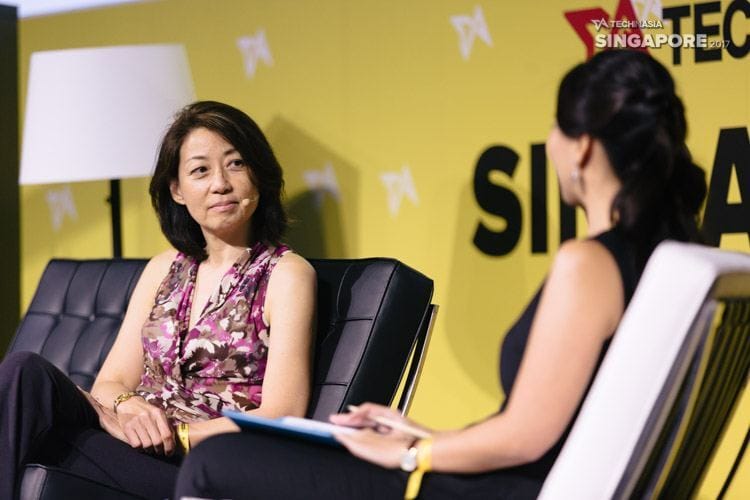
Mistake 1: Trying to scale a brokerage and a SaaS platform at the same time
✌🏻 CXA ran two fundamentally different businesses under one roof → a regulated, people-heavy employee benefits brokerage and a capital-intensive SaaS platform.
The brokerage required hands-on account management, compliance, and operational stability, while the platform demanded long-term R&D, experimentation, and patience before monetisation. By 2019, CXA had ~300 staff across multiple countries, spanning ops, sales, compliance, and engineering.
At the time, this made sense because the brokerage solved real constraints: it provided licenses, immediate revenue, and enterprise access in a highly regulated industry. It also made the startup look credible to insurers and large employers while buying time for the platform vision to mature.
⚠️ The underlying assumption was that a services business could sustainably subsidise a VC-scale SaaS platform until the tech became dominant. Instead, the decision:
locked CXA into a high fixed-cost structure
split leadership focus across incompatible operating rhythms
made profitability highly sensitive to any slowdown in growth
… which compounded financial fragility when funding conditions tightened. Early warning signs were visible in rising headcount without margin expansion, increasing organisational complexity, and the eventual need to sell the brokerage to stay alive.
Mistake 2: Scaling burn and geography before SaaS economics were proven
We truly thought we had made it.
Then, COVID-19 changed everything overnight. We faced an Impossible Choice: adapt or perish.
What followed was a painful, multi-year exit: selling our brokerage entities in Singapore, China and Hong Kong, completing the SaaS build, and transferring IP to the bank.
From 2017 to 2019, CXA expanded rapidly across China, Hong Kong, and Southeast Asia, while building large tech teams in Vietnam and China. This expansion happened before the SaaS platform showed durable, high-margin revenue at scale.
🩸🩸🩸 Despite strong growth narratives, the company continued to run large losses and depended on repeated funding rounds and bridge capital.
While there was revenue growth, it couldn’t catch up with the burn. Then:
fixed costs locked CXA into a narrow margin of error
layoffs and hub shutdowns disrupted product continuity
leadership focus shifted from execution to runway management
And when CXA failed to raise another round from investors, it was game over.
🧠 3 Lessons Learned
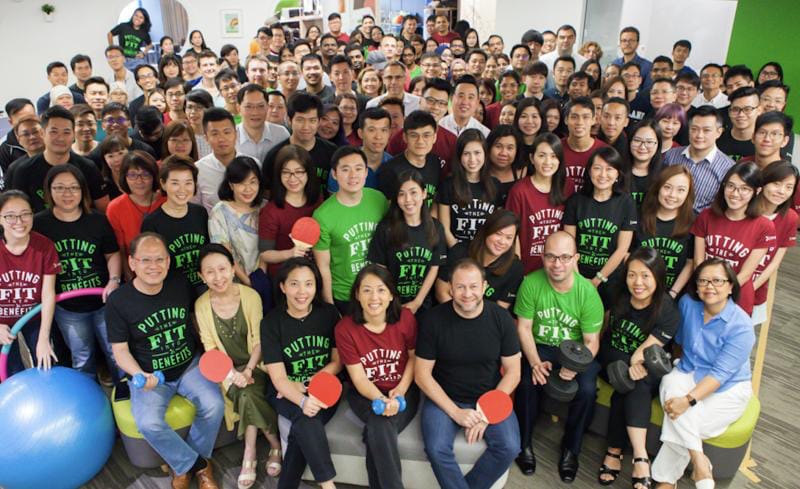
CXA team in Singapore
Lesson 1: Choose the right business model early in regulated B2B markets
CXA tried to be both a brokerage (regulated, people-heavy, cash-flow driven) and a SaaS platform (tech-heavy, scale-driven).
🥊 On slides, that looked like synergy. In reality, it created a company with two opposing operating systems fighting for capital, talent, and leadership attention.
🌮 Key Takeaways:
In B2B insurtech, the constraint isn’t just product or distribution — it’s organisational physics.
Brokerage businesses reward stability and compliance. SaaS rewards speed and iteration. One will always slow the other down.
🛠️ Operator Playbook:
Decide your “end-state business” by Year 2
Ask: If we were forced to kill one model in 18 months, which one survives?
Separate metrics by model
Brokerage: contribution margin, revenue per account manager
SaaS: gross margin, usage depth, expansion revenue
Cap services headcount growth explicitly
Example rule: services headcount cannot grow faster than platform revenue.
Competitor lens (CXA vs peers)
Regional brokers stayed profitable but small.
Pure SaaS HR tools stayed lean but slower to penetrate insurance.
CXA tried to outrun this trade-off — and paid for it in complexity.
Lesson 2: Growth narratives don’t pay for burn — unit economics do
🌏 CXA expanded across SEA and China, built large tech hubs, and hired aggressively before SaaS economics were proven.
The story was compelling. The math lagged.
When capital was abundant, this was survivable. When capital tightened, it became fatal.
🌮 Key Takeaways:
Expansion multiplies cost before it multiplies learning.
“Revenue growth” without improving margins is just delayed failure.
Bridge rounds are not neutral — they are signals.
🛠️ Operator Playbook:
Adopt a “Proof Before Scale” gate
New country = same CAC/LTV as core market ±20%
If not met → pause expansion
Track one brutal metric monthly:
Gross margin per employee
If it’s flat while headcount rises → stop hiring
Run a “kill-a-market” review every 6 months
Which geography would we shut tomorrow if capital froze?
Tooling suggestion
Simple cohort-level P&L by country (Notion / Google Sheets is enough).
Force every GM to show payback periods, not just GMV or ARR.
Lesson 3: Partner-led scale only works after product-market pull is undeniable
CXA’s late pivot to white-label SaaS partnerships with banks and insurers made logical sense — distribution leverage, lower ops burden, investor-friendly narrative.
🙏🏻 But it happened before the platform could pull demand on its own.
When CXA sold the brokerage, it removed the very engine that fed the platform — before SaaS revenue was ready to stand alone.
🌮 Key Takeaways:
Incumbents optimise for their own priorities, not your growth.
Long enterprise sales cycles + partner dependency = timing risk.
Selling your revenue engine before replacement is proven is a one-way door.
🛠️ Operator Playbook:
Earn the right to partner
Rule of thumb: at least 30–40% of new deals must come direct before you rely on partners.
Design “partner-proof” traction metrics
Usage frequency per account
Expansion without sales intervention
Never sell your cash engine until replacement revenue is visible
Target: SaaS ARR ≥ 2× brokerage contribution margin before exit.
Reality check exercise:
Ask: If our biggest partner paused selling for 6 months, do we die?
If yes → you’re not ready.
🔗 The Runway Insights
💰 Southeast Asia Funding Radar
💃 Rate Today’s Edition
What'd you think of today's edition?Your feedback helps me create better content for you! |
That’s all for today
Thanks for reading. I hope you enjoyed today's issue. More than that, I hope you’ve learned some actionable tips to build and grow your business.
You can always write to me by simply replying to this newsletter and we can chat.
See you again next week.
- Admond
Disclaimer: The Runway Ventures content is for informational purposes only. Unless otherwise stated, any opinions expressed above belong solely to the author.
Reply