- The Runway Ventures
- Posts
- 🤯 Hooters Singapore Shut Down After 70% Staff Shortage
🤯 Hooters Singapore Shut Down After 70% Staff Shortage
How Singapore's 30-year franchise collapsed under COVID labor crisis, failed expansion attempts, and an outdated service model

Admond Lee
April 12, 2026

P.S. One brand ran a single The Runway Ventures campaign and generated 250+ founder clicks that turned into inbound leads.
Hey Founders,
Welcome to The Runway Ventures — a weekly newsletter where I deep dive into failed startup stories to help you become the top 1% founder by learning from their mistakes with actionable insights.
Today's story is about how a 30-year Singapore F&B business crumbled when COVID-19 exposed its dependence on outdated business model. Let’s get to it! 🚀
Today at a Glance:
☠️ 1 Failed Startup → Hooters
⚠️ 2 Mistakes → Failed to evolve beyond outdated service model
🧠 3 Lessons Learned → Build a local moat
🔗 The Runway Insights → 2026 state of AI agents
💰 Southeast Asia Funding Radar → OnSite secures $1.3M (Seed) to streamline construction site communication with AI-powered platform
☠️ 1 Failed Startup: Hooters
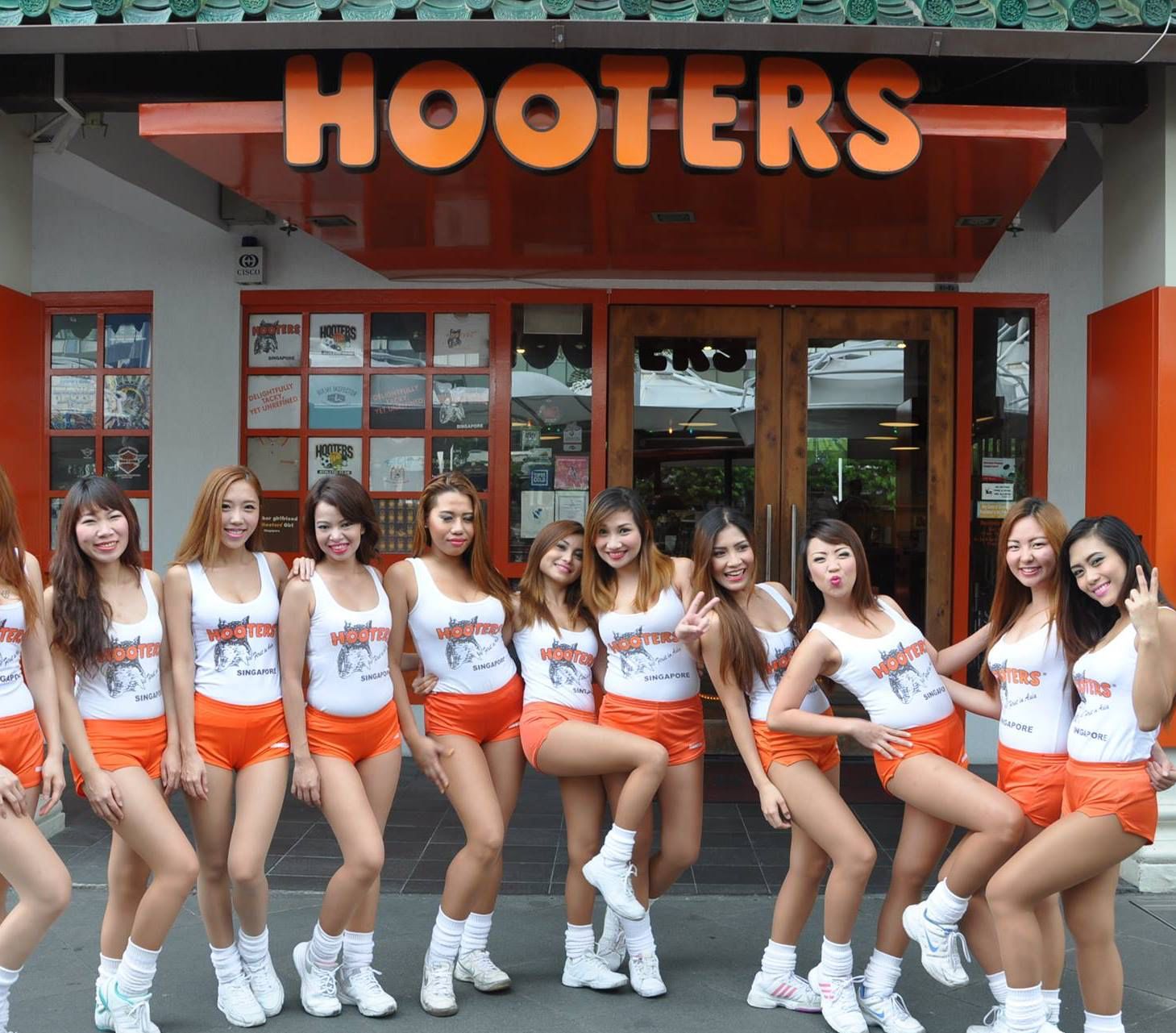
🚀 The Rise of Hooters
🇸🇬 Founded by C.S. Chua and his wife in 1996, Hooters Singapore was the first international franchise of the American sports bar chain — they brought Buffalo wings and cold beer to Singapore. And those uniforms.
🕺🏻 Founders’ Story
C.S. Chua was an electronics trading entrepreneur when he visited a Hooters in the US during a family holiday in August 1995. His daughter Selena later recalled: "I was just having fun and eating my wings there… Next thing I knew, we were touring around the kitchen."
🤤 One meal. That's all it took.
Chua knew Singapore needed this — making Singapore the first country outside North America to have a Hooters.
The Problem — 🍺 Back in the 90s, Singapore didn't have many places to watch sports and eat wings.
American comfort food like Buffalo wings was hard to find.
Most F&B concepts were either fine dining or hawker centres — little middle ground for casual group dining.
The Solution — 🍗 Hooters Singapore opened a massive sports bar in Clarke Quay.
Signature Buffalo wings with proprietary sauces and American comfort food.
Multiple TVs showing sports, creating a lively bar atmosphere.
The controversial but iconic Hooters Girls service model.
A welcoming space for expatriates, tourists, and curious locals.
🇸🇬🍻 In short, Hooters Singapore was an unapologetically American sports bar that filled a niche for casual dining entertainment in 90s Singapore.
 | 🦉 The timing was perfect. When Hooters opened in December 1996, it became an instant curiosity. 🤨 Selena Chua remembered the early cultural resistance: "At that point in time, people are more conservative. So, you know, the girls wearing the uniform. A lot of people will be like… |
Hey, why is the uniform so short?
Guess what? The concept worked. Former waitress Sabrina recalled the golden years: "Back then, Hooters was always busy… when all those Americans came in… they would spend so much money, it was ridiculous. And they tipped!"
🫶🏻 The restaurant found its rhythm serving 3 core groups:
American expatriates seeking a taste of home
Curious tourists
Local Singaporeans who loved the casual vibe
🦉🦉🦉 At its peak, Hooters Singapore:
operated 3 outlets simultaneously across Singapore (Clarke Quay, Marina Bay, Fusionopolis) in 2017
employed 25 Hooters Girls at Marina Bay outlet alone (selected from hundreds of applicants)
regularly filled its 300-seat Clarke Quay flagship on weekends
raised over S$25,000 for local charities
became Singapore's longest-running international franchise (30 years)
Meanwhile, Hooters of America announced ambitious plans for 35 locations across Southeast Asia.
For a moment, it looked like Hooters would become as common in Singapore as McDonald's.
📉 The Fall of Hooters
But the cracks were already showing.
Most people might think Hooters Singapore shut down due to over-expansion and COVID-19 pandemic. But the deeper reason is this:
🙅🏻♂️ Young Singaporeans simply didn't want to work in F&B anymore.
📌 Here’s what happened to Hooters:
🍗🍺 From 1 meal to 3 outlets
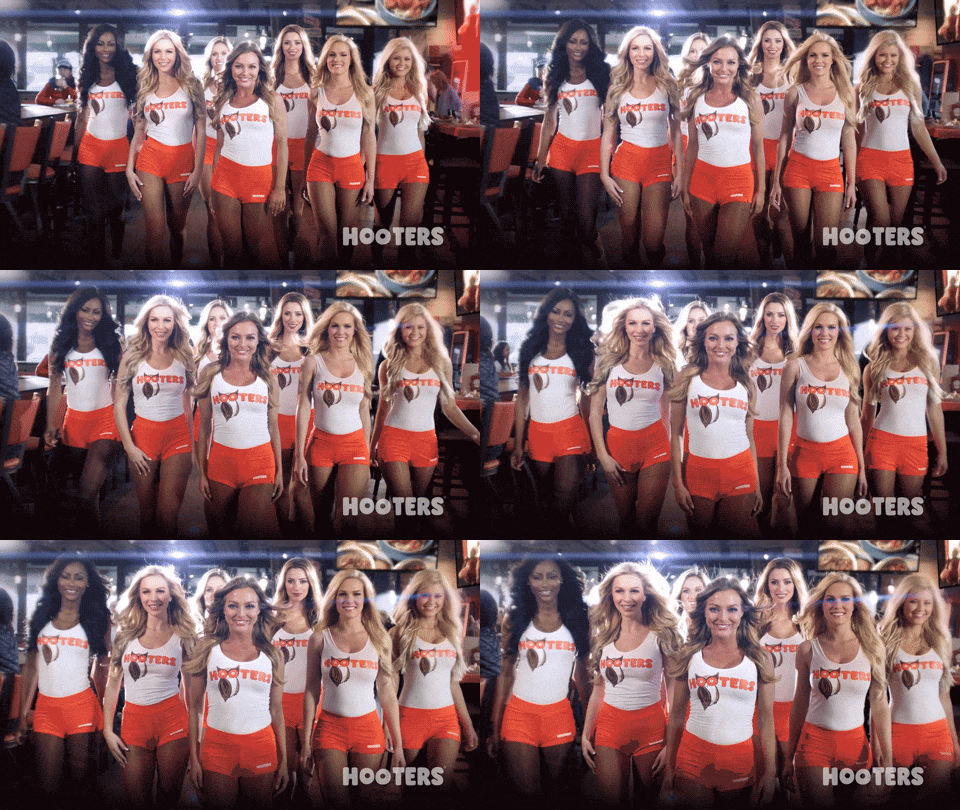
Aug 1995 — 💡 Chua family visited Hooters in the United States during a holiday trip.
C.S. Chua conceived the idea to bring the franchise to Singapore.
Dec 1996 — 🚀 Hooters Singapore opened at Clarke Quay as the first international franchise (first in Asia).
2002 — Razmi Bin Ibrahim joined with no culinary experience, eventually became Head Chef (who stayed until the very end).
2004 — 🫡 Selena Chua began working part-time during school holidays.
The second generation entered the family business, starting in the kitchen.
27 Jan 2015 — Hooters of America announced 35-location Southeast Asia expansion with Destination Group.
Major regional expansion plan announced (separate from the Chua family operation).
2015 — Selena Chua joined full-time and began her trajectory toward Managing Director.
19 Jun 2016 — 🎉 20th anniversary renovation unveiled with modernised interior.
6 Feb 2017 — Hooters Marina Bay opened as 2nd Singapore location.
3 Apr 2017 — Hooters Fusionopolis opened as 3rd outlet.
😷 The last wings
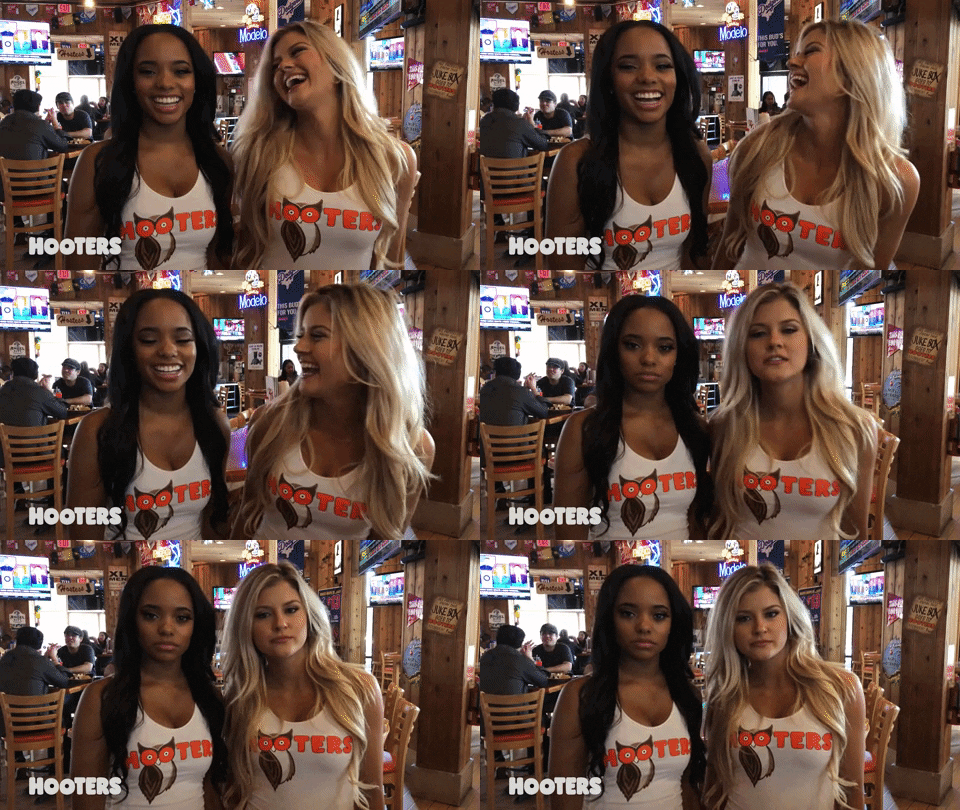
2019 — 📉 Marina Bay and Fusionopolis outlets closed.
Expansion reversed — only the original Clarke Quay location remained.
Apr 2020 — 🦠 COVID-19 circuit breaker forced a 2-month closure.
Tourist traffic eliminated, nightlife restricted, no alcohol sales after 10:30pm.
2021-2023 — 🚨 Chronic labour shortage hit as younger workers avoided the F&B sector.
Rising costs forced salary increases while menu prices stayed flat, squeezing margins.
2024 — Singapore F&B crisis deepened — 3,047 outlets closed in one year, highest in a decade.
31 Mar 2025 — 💸 Hooters of America filed Chapter 11 bankruptcy with US$376 million debt.
28 Dec 2025 — ☠️ Hooters Singapore announced closure after 30 years.
Reasons? Manpower shortages and persistently slow post-COVID sales.
Dec 2025 - Jan 2026 — Business jumped close to 100% after closure announcement.
Groups ordered 40-50 pieces of chicken wings per table as nostalgic customers said goodbye.
31 Jan 2026 — 🔚 Final day of operations — Hooters exited Singapore completely.
Apr 2026 — 🌱 Beans & Barrels opened with all 10 former Hooters kitchen and floor staff retained.
🙏🏻 When Selena Chua decided to close after 30 years, she made sure every single employee had a job waiting at her new restaurant (Beans & Barrels).
The wings were still good. The beer was still cold. But the world had moved on.
The 1990s formula — American branding, tourist traffic, and a controversial service model — couldn't survive Singapore's post-pandemic reality of labour shortages, changing social attitudes, and a dining scene that had moved far beyond novelty concepts.
Want to learn more about Hooters Singapore’s downfall?
⚠️ 2 Mistakes
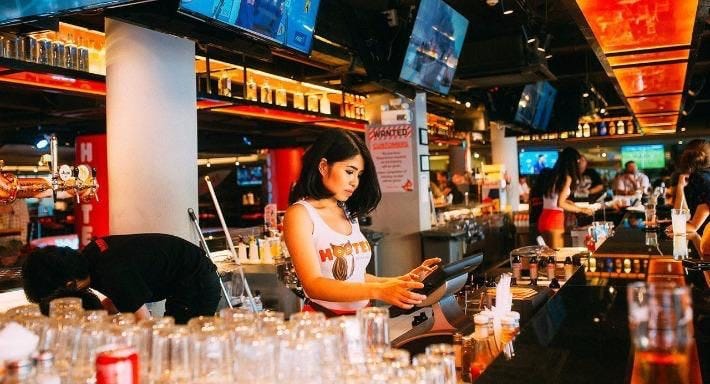
Mistake 1: Failed to evolve beyond outdated service model
The Chua family clung to the controversial 'Hooters Girls' concept for 30 years without meaningful adaptation, even as Singapore's social attitudes shifted dramatically.
🤫 Sure, they renovated the interior in 2016. They expanded locations in 2017. But they never addressed the core issue — younger Singaporeans found the concept outdated and refused to work there.
By 2025, they couldn't fill positions despite raising salaries. Only 15 total staff remained to serve a 300-seat restaurant.
Mistake 2: Built a 30-year business on customers who were always leaving
💰 Hooters Singapore's revenue engine ran on 2 groups that never stayed:
expats on 2-3 year postings
tourists passing through Clarke Quay
That was the business model. American expats treating Hooters like a home away from home, US Navy personnel on shore leave, and tourists who recognised the brand. These customers spent big — but they rotated out every few years. Each wave had to be replaced by the next.
🇸🇬 But after COVID, tourist traffic collapsed. Nightlife restrictions killed the walk-in crowd. Expat numbers shifted. And the local Singaporeans who showed up at the end — ordering 40-50 wings per table after the closure announcement — proved something painful: the local affinity existed, but Hooters never converted it into regular patronage.
They kept menu prices flat for decades to stay accessible, but never adapted the offering to make locals choose Hooters over the dozens of new craft beer bars and modern sports pubs that had opened around them.
When your best customers are always temporary, your business is always fragile.
🧠 3 Lessons Learned
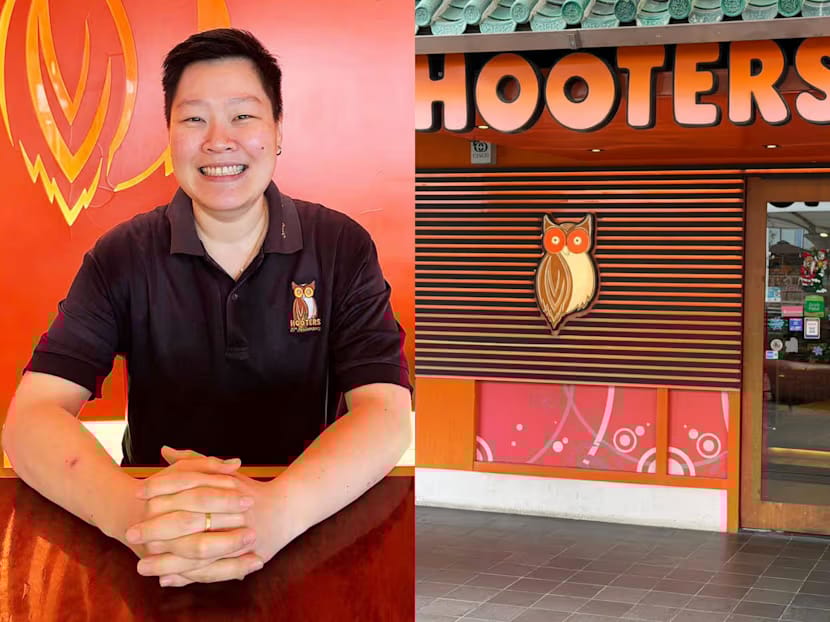
Selena Chua (Managing Director @ Hooters Singapore)
Lesson 1: Evolve your concept before the market forces you to
Hooters Singapore renovated their interior in 2016. They expanded locations in 2017. But they never questioned whether the 'Hooters Girls' concept still worked in modern Singapore.
🌮 Key Takeaways:
What works at launch won't work forever. Singapore's social attitudes shifted dramatically from 1996 to 2026.
Renovation isn't reinvention. New paint doesn't fix an outdated concept.
If your industry struggles to attract talent but you struggle even more, your brand is the problem.
🛠️ Operator Playbook:
🎯 Run a "concept relevance audit" every 3 years
Survey target employees: "Would you work here? Why not?"
Benchmark against competitors' hiring success
If applications drop below industry average, pivot.
📊 Track social sentiment beyond sales
Use Brand24 to monitor brand perception
Set alerts for "[brand] + outdated" or "[brand] + embarrassing"
Lesson 2: Build a local moat
Hooters Singapore ran for 30 years on expats, tourists, and US military personnel — high-spending customers who rotated out every 2-3 years.
💟 When COVID cut that pipeline, there was no local base to fall back on. The nostalgic crowds that packed the restaurant after the closure announcement proved locals cared — they just didn't have a reason to come regularly.
🌮 Key Takeaways:
Transient customers (expats, tourists) create revenue volatility disguised as stability during good times.
If >50% of your revenue depends on customers who'll leave within 3 years, you're one external shock away from collapse.
Nostalgia at closure ≠ regular patronage. The emotional connection existed — it was never activated into habit.
🛠️ Operator Playbook:
📊 Audit your customer dependency ratio quarterly
Segment revenue: locals vs expats vs tourists vs corporate events
If any single transient segment exceeds 40%, build a deliberate local acquisition channel
Track repeat visit rates by segment — locals should visit 3x+ per month to count as a moat
🏠 Build a "local regulars" programme before you need one
Lunch specials targeting nearby office workers (not just evening/weekend tourist traffic)
Local menu adaptations (for example → Hooters could have added laksa wings or chilli crab dip without losing identity)
Lesson 3: Geographic expansion can't fix a broken concept
In 2017, at peak success, Hooters opened 2 new outlets — Marina Bay and Fusionopolis — within two months. Both failed within 2 years.
Rather than investing those resources into evolving the flagship location or testing new concepts, they simply replicated the same 1990s formula in new locations. The expansion drained capital and management attention precisely when the business needed reinvention.
🌮 Key Takeaways:
Expansion multiplies your current problems, it doesn't solve them.
If your core concept is weakening, more locations accelerate the decline.
In Singapore F&B, location variety can't compensate for concept staleness — customers have too many alternatives.
🛠️ Operator Playbook:
🧪 Test concept evolution before geographic expansion
Try new service models in sections of existing outlet first
Launch pop-up concepts to gauge market response
Only expand what's proven to work in the current market
📍 Apply the "one strong outlet" rule
Before opening location #2, ask: "Is location #1 profitable without owner salary?"
Track same-store sales growth — if declining, fix the concept, don't expand
Study Shake Shack Singapore — they perfected one location before carefully adding more
🔗 The Runway Insights
💰 Southeast Asia Funding Radar
💃 Rate Today’s Edition
What'd you think of today's edition?Your feedback helps me create better content for you! |
That’s all for today
Thanks for reading. I hope you enjoyed today's issue. More than that, I hope you’ve learned some actionable tips to build and grow your business.
You can always write to me by simply replying to this newsletter and we can chat.
See you again next week.
- Admond
Disclaimer: The Runway Ventures content is for informational purposes only. Unless otherwise stated, any opinions expressed above belong solely to the author.
Reply