- The Runway Ventures
- Posts
- 🤯 JKN Global Group Collapse: How the Miss Universe Deal Triggered a Debt Crisis
🤯 JKN Global Group Collapse: How the Miss Universe Deal Triggered a Debt Crisis
From importing global TV content to buying Miss Universe — the rise and dramatic downfall of JKN Global Group after bond defaults, financial turmoil, and fraud investigations.

Admond Lee
March 15, 2026

P.S. One brand ran a single The Runway Ventures campaign and generated 250+ founder clicks that turned into inbound leads.
Hey Founders,
Welcome to The Runway Ventures — a weekly newsletter where I deep dive into failed startup stories to help you become the top 1% founder by learning from their mistakes with actionable insights.
Today’s story is about how a Thai media empire that bought Miss Universe collapsed under debt, bond defaults, and fraud investigations. Let’s get to it! 🚀
Today at a Glance:
☠️ 1 Failed Startup → JKN Global Group
⚠️ 2 Mistakes → Financing long-term expansion with short-term debt
🧠 3 Lessons Learned → Operating system first before stacking complexity
🔗 The Runway Insights → Common mistakes with vibe coded websites
💰 Southeast Asia Funding Radar → Dat Bike raises $4M (Series B) to expand production and distribution
☠️ 1 Failed Startup: JKN Global Group

🚀 The Rise of JKN Global Group
🇹🇭 Founded by Anne Jakrajutatip in 2013, JKN Global Group was a Thai media company that built a powerful business importing and distributing foreign TV content — before expanding into broadcasting, commerce, and even acquiring the global Miss Universe brand.
🕺🏻 Founder Story
Anne Jakrajutatip didn’t start with a glamorous media empire. She was helping out in her family’s struggling video-rental business in Bangkok when she spotted an opportunity most people ignored — foreign documentaries and TV shows that Thai audiences had never seen before.
One of the first hits she brought in was the BBC’s Walking with Dinosaurs, which reportedly sold around a million copies in Thailand. That early success showed her something powerful 👇🏻
🌍 Thai audiences were hungry for global content — they just needed someone to bring it to them.
So Anne built a business around buying international TV rights, localising them for Thai viewers, and selling them across broadcasters and platforms — the foundation that eventually became JKN Global Group.
The Problem — 🌍 Thai TV broadcasters needed a steady stream of high-quality shows to keep audiences watching, but producing original content was expensive, slow, and risky.
At the same time, broadcasters didn’t have the expertise to find, license, localise, and distribute international content (a huge library of proven hit content overseas) at scale.
So most international content never reach Thai audience.
The Solution — 📺 JKN turned global content into ready-to-air programming for Thai TV networks by:
Acquiring international program rights from countries like India, Korea, Japan, and the US.
Localising the content through dubbing and translation for Thai audiences.
Licensing the shows to Thai broadcasters and platforms including digital TV, cable, and streaming services.
🤑 Buy rights → Localise → Sell what audiences actually want
This model worked incredibly well — because broadcasters could suddenly access proven global hits without taking production risk, while JKN made money by licensing those rights across multiple platforms.
 | 🤯 And the demand was massive. JKN built a huge catalogue of content from countries like India, South Korea, Japan, and the United States. 🇮🇳 Indian dramas in particular became a major driver of growth as Thai viewers binge-watched long-running series that could fill hundreds of broadcast hours. |
📈 By 2017, the company was big enough to go public.
JKN was listed on Thailand’s Market for Alternative Investment (MAI) on 30 November 2017, giving the company fresh capital to scale its content acquisitions and distribution network.
💰 By 2020, JKN reported that its content export business grew 28%, with program-rights revenue reaching THB 1.63 billion. The company was no longer just importing content into Thailand — it was also exporting Thai shows to international markets.
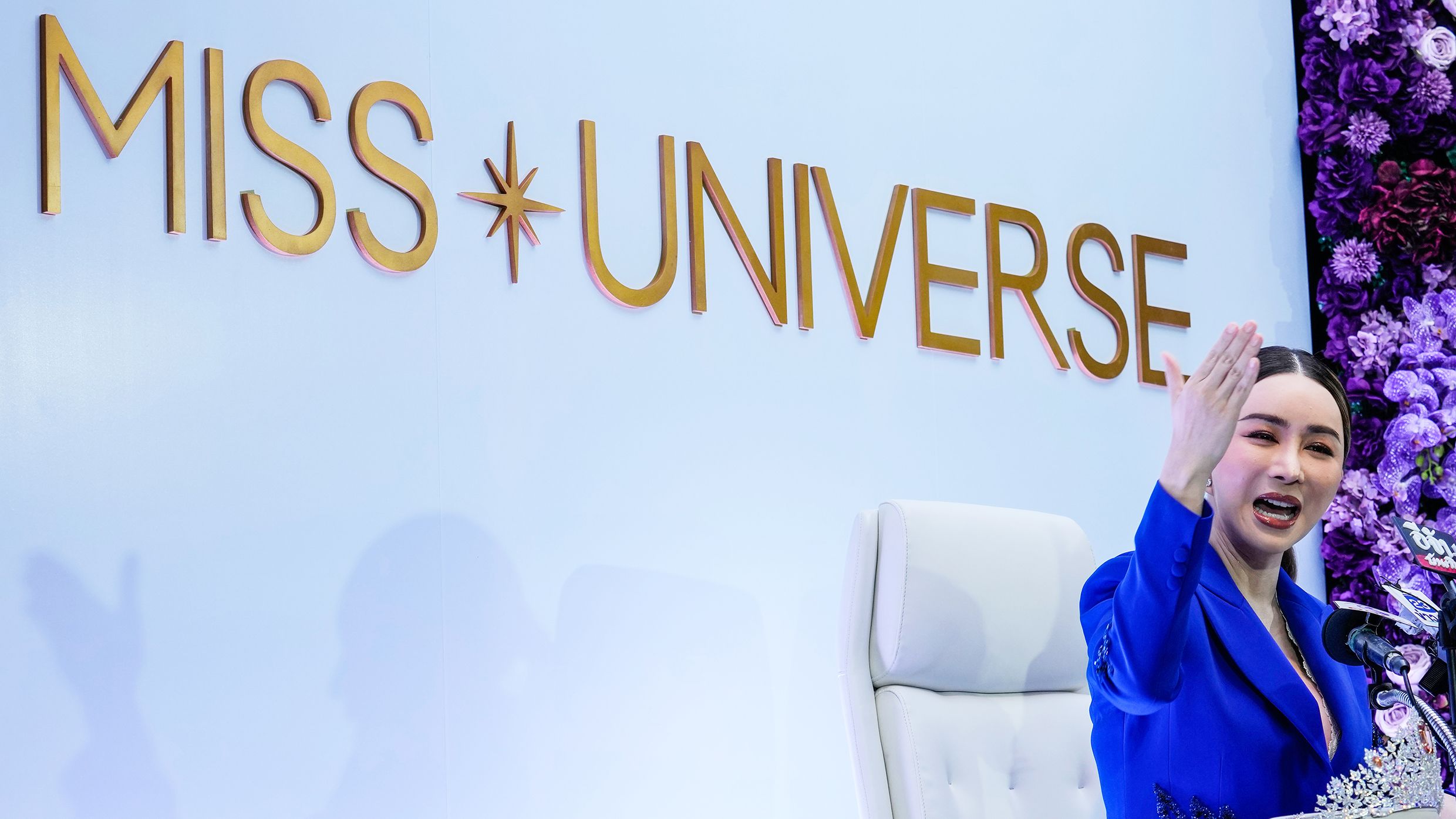
👑 In October 2022, JKN shocked the global entertainment industry by buying the Miss Universe Organization — including Miss Universe, Miss USA, and Miss Teen USA — for $20 million from IMG.
At that moment, JKN had evolved from a Thai content distributor into a global media brand owner.
The strategy was simple:
Own attention → Then monetise it through licensing, content, and commerce
And it looked like JKN had cracked the formula.
📉 The Fall of JKN Global Group
Buying Miss Universe looked like the ultimate power move.
💸 But behind the scenes, JKN’s finances were already under intense pressure. Debt was piling up, cash flow was tightening, and the company was taking bigger and bigger bets to keep growing.
Within just 3 years, JKN would go from a headline-making acquisition… to debt default, bankruptcy court, criminal investigations, and delisting.
📌 Here’s what happened to JKN Global Group:
💃💃💃 Buying the Miss Universe Organization

2013 — JKN was founded by Anne Jakrajutatip.
30 Nov 2017 — IPO on the Market for Alternative Investment in Thailand.
Jun 2018 — ✍🏻 A major Thai drama exporter, BEC, signed a partnership with JKN to distribute dramas into additional international markets (e.g. Indonesia, Brunei, Singapore, Taiwan, Middle East, Latin America).
Dec 2018 — Mediacorp announced a distribution deal to provide 300 hours of Channel NewsAsia content to JKN Global Media.
2020 — JKN took its content/distribution business to the main board of Thailand’s stock exchange, while growing exports and programme-rights revenue.
12 Nov 2020 — 📈 Listed on the main board of the Stock Exchange of Thailand.
Apr 2021 — 📺 Acquired control of the digital TV station previously known as New 18.
Filings later explicitly referred to acquisition/operation since April 2021.
Apr-Sep 2022 — 💰 Filings showed JKN’s business mix:
programme-rights sales dominate revenue
advertising/media service revenue is tied to ad time on JKN 18 and news under a CNBC-branded format
product sales include nutritional supplements, healthy drinks, and home-shopping
finance costs rise due to debentures/loans used for acquisitions
Oct 2022 — 👑 JKN bought Miss Universe for $20 million from IMG, gaining the Miss Universe/USA/Teen USA brands.
🥵 Debt stress → default → court rehab → deteriorating financials → regulatory action → delisting + shutdown

31 Aug 2023 — 🤯 JKN went public with its looming repayment problem as its CEO said liquidity management wasn’t matching forecasts.
1 Sep 2023 — JKN couldn’t repay in full the JKN239A debenture due (THB 609,981,369.86), offering partial repayment and seeking rescheduling.
27 Sep 2023 — ⚠️ SEC highlighted a bondholder meeting agenda → extend maturity, partial repayment, raise coupon, and waive default to avoid call default acceleration.
20 Oct 2023 — 📉 SEC later stated a sale agreement was signed to sell 50% of the Miss Universe operating subsidiary to Legacy Holding Group USA Inc.
8-9 Nov 2023 — 😧 JKN filed for business rehabilitation.
The Central Bankruptcy Court accepted the petition, triggering automatic stay and affecting bond payments.
A petition examination date was set (29 Jan 2024).
29 Aug 2024 — JKN was appointed as plan administrator.
Nov-Dec 2024 — SEC instructed bondholders to file debts, indicating a Government Gazette publication on 4 Nov 2024 and a filing deadline of 4 Dec 2024.
Nov 2024 — Industry reporting said trading was suspended again due to missed financial reporting deadlines (delisting warnings followed).
22 Apr 2025 — 🧐 SEC imposed civil sanctions over materially misleading disclosure (Miss Universe transaction), including a director/executive ban period.
Jun 2025 — SEC instructed JKN to rectify its 2023 financial statements and references criminal complaint pathways.
Public reporting said key executives resigned amid the case.
11 Jul 2025 — SEC extended the deadline for rectified 2023 statements to 9 Sep 2025 due to expanded special-audit scope.
9 Sep 2025 — SEC told JKN to submit rectified 2023 financials “without delay” and rejected further extensions.
25 Dec 2025 — 🚨 SEC expanded investigation:
criminal complaints against 12 people
allegations of fictitious content transactions and insider trading
asset freezes and travel bans announced
rehabilitation petition was also referenced as dismissed by the Court of Appeals for Specialised Cases.
27 Dec 2025 — SET delisted JKN after a time-limited final trading window and multiple public warnings.
26 Jan 2026 — 💀 Finally, JKN18 ceased broadcasting.
Looking back, JKN’s collapse didn’t happen overnight.
It was a slow chain reaction.
⚠️ Debt piling up.
⚠️Cash flow tightening.
⚠️Trust with investors breaking down.
Each problem made the next one worse — until the company could no longer recover.
Within a few years, JKN went from buying Miss Universe… to being delisted from the stock exchange.
But the real question founders should ask isn’t what happened.
🤔 It’s why it happened.
Want to learn more about JKN Global Group’s downfall?
⚠️ 2 Mistakes

Mistake 1: Financing long-term expansion with short-term debt
🚨 JKN aggressively expanded its business — acquiring a TV channel, building a commerce arm, and buying Miss Universe for $20M — while funding much of that growth through debentures and loans with fixed maturity dates.
But the company’s cash flow came from content licensing, advertising, and receivables, which are unpredictable and often delayed.
📑 When THB 609.9 million in bonds matured in September 2023, JKN couldn’t repay them in full and had to ask bondholders to restructure the debt.
The company’s expansion strategy assumed future revenue would arrive fast enough to cover those obligations.
When it didn’t, the capital structure collapsed.
Mistake 2: Expanded into multiple complex businesses at once
JKN started as a focused content rights distributor.
It was smart.
But leadership expanded into several very different businesses simultaneously:
operating a digital TV station (JKN18)
running a home-shopping commerce platform
managing a global beauty pageant brand (Miss Universe).
Each of these businesses has completely different economics and operational requirements.
📉 As the company grew more complex, costs rose sharply. By 2023, JKN reported massive impairments on program rights and trademarks, expected credit losses on receivables, and a THB 2.16 billion net loss.
The company expanded faster than its operating and financial systems could manage.
🧠 3 Lessons Learned

Lesson 1: Cash flow matters more than brand prestige
JKN’s biggest mistake wasn’t just buying big assets. It was funding a long-cycle business with short-term financial pressure.
That is deadly in media. Why?
💵 Because media cash flows are messy by nature:
you pay upfront for rights, production, talent, events, or distribution
then you collect revenue later through licensing, ads, sponsorships, subscriptions, or receivables.
If your debt maturity arrives before your cash does, the game is over — no matter how famous your brand is.
And this is exactly what happened to JKN.
🌮 Key Takeaways:
If you run a media, content, events, SaaS, ecommerce, or agency business, your real moat is not “growth”. It’s survivable cash timing.
You can survive a bad quarter, but it’s hard to survive a hard payment deadline with soft cash inflows.
🛠️ Operator Playbook:
📊 Run a 13-week cash forecast every Monday using Xero
Not monthly. Weekly. You want one simple view of:
cash in bank
committed payables
expected receivables
debt / fixed obligations
“if collections slip by 30 days, do we still survive?”
🙏🏻 Never fund long-term bets with short-term cash pressure
Ask this question before making a big bet, “Will this asset generate cash before my obligations come due?”
If the answer is no, it should not be financed with short-dated debt.
Also, if your payback window is 12–24 months but your obligations hit in 3-6 months, you’re building on a trapdoor.
Lesson 2: Operating system first before stacking complexity
📚 JKN failed because the company stacked too many different businesses together too quickly.
🐙🐙🐙 The company started as a content rights distributor, but expanded into:
operating a TV channel (JKN18)
running a home-shopping commerce platform
managing a global pageant brand (Miss Universe).
Each of these businesses requires completely different skills, systems, and economics.
Instead of building one powerful engine, JKN built several engines at the same time — and the organisation struggled to manage them all.
🌮 Key Takeaways:
Every new business line multiplies operational complexity.
Expansion without focus often destroys the core business.
Revenue diversification can create execution risk if systems don’t scale with it.
🛠️ Operator Playbook:
🚀 Use the “70% overlap rule” before expanding
At least 70% of the following should overlap with your core business:
customer
distribution
team capability
monetisation model
cost structure
🤑 Create a mini-P&L for every new business unit
Track profitability independently so failing experiments don’t drag down the entire company.
Stress-test your strategic advantage using the 7 Powers framework.
Lesson 3: Trust is your asset in capital markets
JKN might still have had a shot at restructuring a financial crisis.
But once regulators said the company had disseminated false or materially misleading information, and later pursued issues tied to financial statements and alleged fictitious transactions, the company’s problem became much bigger than cash.
🤨 It became a credibility collapse.
And once that happens, everything gets worse at the same time:
regulators escalate
recovery options shrink fast
creditors get more aggressive
counterparties become cautious
investors stop believing your numbers
🌮 Key Takeaways:
Capital markets run on confidence in disclosed numbers.
Financial stress becomes fatal when credibility disappears.
Once trust breaks, investors, lenders, and regulators move aggressively.
In short, doing the right things is always the right things to do. Be transparent.
🛠️ Operator Playbook:
📒 Separate storytelling from financial disclosure
Vision is for marketing. Financial reporting must remain brutally factual.
⚠️ Close your books monthly and publish a “risk memo”
Ask:
what changed in cash?
what changed in receivables?
what changed in liabilities?
what assumptions are we making that could break next quarter?
what would a skeptical investor worry about right now?
🚩 Create a “red flag disclosure list”
Automatically review items like:
related-party transactions
unusual revenue spikes
large asset sales
debt restructuring
🔗 The Runway Insights
💰 Southeast Asia Funding Radar
💃 Rate Today’s Edition
What'd you think of today's edition?Your feedback helps me create better content for you! |
That’s all for today
Thanks for reading. I hope you enjoyed today's issue. More than that, I hope you’ve learned some actionable tips to build and grow your business.
You can always write to me by simply replying to this newsletter and we can chat.
See you again next week.
- Admond
Disclaimer: The Runway Ventures content is for informational purposes only. Unless otherwise stated, any opinions expressed above belong solely to the author.
1
Reply