- The Runway Ventures
- Posts
- 🤯 Learning Loop & an SF move that came a bit too late
🤯 Learning Loop & an SF move that came a bit too late
How staying outside the core San Francisco ecosystem created a fundraising deadlock that simply could not be bootstrapped.

Admond Lee
January 18, 2026

P.S. One brand ran a single The Runway Ventures campaign and generated 250+ founder clicks that turned into inbound leads.
Hey Founders,
Welcome to The Runway Ventures — a weekly newsletter where I deep dive into failed startup stories to help you become the top 1% founder by learning from their mistakes with actionable insights.
🌏 I ran TRV without a proper business banking account for way too long. Clients paying from 5 countries, vendors overseas, 4 different tools stitched together. The FX fees alone were bleeding me dry.
Switched to Airwallex. Now everything's in one place — I collect payments with zero fees, pay zero FX fees on transfers, and 90% of my transfers land same day instead of 3-5 days.
That's why I joined Airwallex for Startups — a program built for globally ambitious founders like us. Here's what you get:
Zero fees on your first $20k collected + zero FX on your first $20k of transfer
Exclusive perks from partners like OpenAI, Notion, HubSpot, Nebius, and Manus
Access to expert mentorship and an AI Sandbox for growth opportunities
Join 2,000+ founders from startups like Sleek , StaffAny, and HeyMax
Just open an account to join — no purchase required.
Today’s story is about Learning Loop founded by Sina — a peer-learning community for founders, and the journey that led to its shutdown. Let’s get to it! 🚀
🙏🏻 P.S. Today’s story is made possible because Sina was open to share his journey, mistakes and learnings with me during the founder interview. Thanks Sina!
🫡 I’ve known Sina for a few years ever since he started Learning Loop. Along the way, we’ve been supporting each other in many ways. His vision for personalised learning at scale was very inspiring.
So when he launched Integral, I even angel invested in him. When he decided to wind down the company, he called me up, shared his tough decision, and returned me the full invested amount because I invested 2 months before his decision to shut down the company and he hadn’t spent the money yet. Respect ✊🏻
I felt sad (despite knowing 90% of startups will fail). At the same time, deep down, I knew I made the right decision in the beginning. Because I believed in Sina, and that’s all that matters.
Sina, this story is for you 💪🏻
Today at a Glance:
☠️ 1 Failed Startup → Learning Loop
⚠️ 2 Mistakes → Not moving to San Francisco early enough
🧠 3 Lessons Learned → Speed to decision matters
🔗 The Runway Insights → The most important skill to learn in the next 10 years
💰 Southeast Asia Funding Radar → Atome secures $345M syndicated debt facility for SEA growth
☠️ 1 Failed Startup: Learning Loop
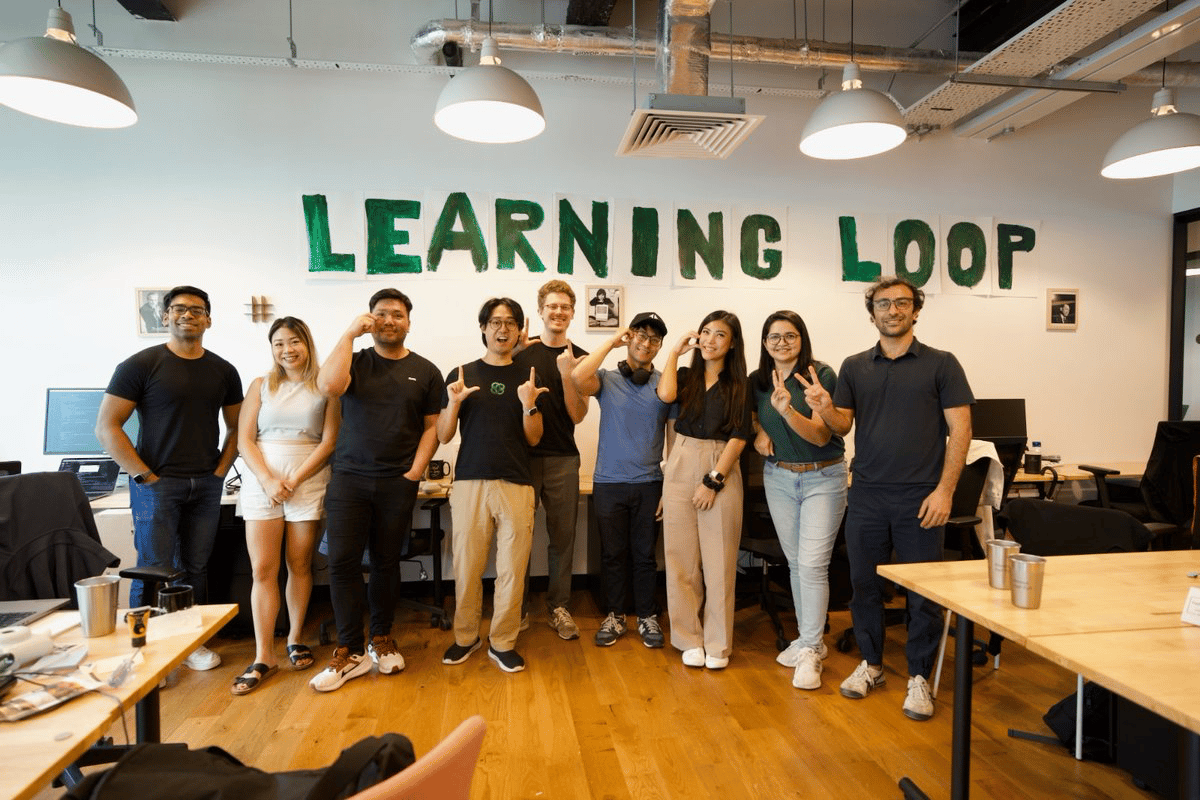
🚀 The Rise of Learning Loop
🇸🇬 Founded by Sina in August 2021, Learning Loop was a peer-learning community for startup founders who wanted to learn faster through small, trusted groups and real conversations — not courses, not gurus, and not top-down advice.
🕺🏻 Founders’ Story
Sina didn’t start Learning Loop because he wanted to “build a community.”
He started it because he was obsessed with one question: why is learning still so generic when everything else is personalised?
After moving to Singapore during COVID to build a startup via Entrepreneur First, he spent nearly two years experimenting — until he realised startup founders were the perfect learners.
They faced real problems, learned fast, and needed honest peer feedback, not expert lectures.
Learning Loop was born as a way for founders to learn from each other, in small trusted groups, through shared experience instead of advice.
The Problem — 😖 Learning, especially for founders, was broken. It was generic, content-heavy, and disconnected from real problems.
Founders were learning from blogs, courses, and “experts”, but still felt stuck, isolated, and unsure what to do when facing messy, real-world decisions.
The Solution — 🧠 Learning Loop replaced top-down advice with peer learning.
Founders were placed into small, trusted groups where they learned through structured conversations, shared experiences, and real challenges — turning learning into something personal, practical, and immediately actionable.
🧑🏻🏫 In short, Sina’s vision was to build personalised learning without content.
He believed the best learning doesn’t come from courses or experts, but from conversations between people facing real problems.
🎯 His goal was to:
1. Capture those conversations, decisions, and experiences as data.
2. Then, use technology / AI to turn them into personalised learning loops that help people make better decisions faster — first for founders, and eventually for any group or community.
 | 🌱 As Learning Loop grew, the traction was promising. Within the first couple of years, they gathered around 60 paying members in the founder community. 💰 It was a paid membership model (about $1,500 per year per member), though Sina offered discounts to those who couldn’t afford the full fee. 🤑 Those 60 founders were serious entrepreneurs, and collectively they’d raised tens of millions in funding for their own startups. |
🎉 In February 2024, Learning Loop launched on Product Hunt.
🏆 It blew up and became the #1 Product of the Week and even #2 Product of the Month on Product Hunt.
That moment mattered because it wasn’t just “nice marketing.” It was the signal that Learning Loop could be bigger than a Singapore-based founder circle.
And that triggered Sina’s next leap:
Maybe now that I have a community that’s active, if I build Integral… that’s how I can scale this from a founder audience to any group.
Remember Sina’s vision to create a personalised learning experience for any group? Yeah, that’s his masterplan. And Integral was the natural next step going from “community” to “platform”.
Learning Loop gave him proof that founders will show up for peer-learning.
Now he wanted to build the software layer that could scale that learning to thousands of communities.
✌🏻 Integral was the bet.
So what’s Integral? Integral is an AI-native community platform designed to replace Slack or Discord for serious communities. Instead of endless channels and noisy chats, Integral is built to:
At its core, Integral treats conversations as data. |  Sina spent 4.5 years sleeping on friends’s couches — true hustler 🫡 |
It uses AI to understand what’s being discussed, connect members to relevant past decisions or people, and help communities learn and coordinate better at scale — which is how Sina tried to scale the original Learning Loop vision beyond a single founder community.
🏔️ At its peak, Learning Loop had something rare — a tight founder community that actually worked.
📉 The Fall of Learning Loop
But turning that into a scalable company proved far harder than building the community itself.
🤺 As Sina doubled down on Integral to scale the vision, Learning Loop quietly became a company caught between two worlds: a high-touch community business and a venture-scale software bet.
That tension — plus timing, capital constraints, and focus — is what ultimately broke the loop.
📌 Here’s what happened to Learning Loop:
We hit a hard wall on capital right when we were ready to double down. The product was out, we had users, and this was the moment we needed to hire and grow.
But we needed money to grow, and we also needed growth to get the money.
And the business just wasn’t bootstrappable at that stage.
🔥 Community → Software

Feb 2021 — Sina joined Entrepreneur First in Singapore and relocated there to build a company.
Apr 2021 — 🔥 Learning Loop began with the vision of building a personalised learning company using data + models, not content.
2023 (about 2 years) — Heavy experimentation on “what learning means” and what interface/business model worked.
Sina concluded it’s too broad and must be narrowed.
2022–2023 — ⛺️ Pivoted to focus on startup founders, and Learning Loop became a peer-learning founder community with structured conversations and mutual support (introductions, decision-making help).
Sep 2023 — 🧑🏻💻 Started a physical space experiment in Singapore.
After running for 6 months, despite generating some revenue, the physical space experiment was shut down because it didn’t fit the long-term strategy to scale personalised learning due to its high operational overhead (logistics, vendor management, time, attention).
5 Feb 2024 — 🎉 Learning Loop was publicly launched on Product Hunt as a peer-to-peer founder residency/community product.
Early 2024 — With a strong community, in-person events, and revenue (still without proprietary software), Sina decided to pursue the original “scale personalised learning” vision via a software platform: Integral.
2024 — 💪🏻 Sina publicly shared he’s “doubling down” on building Integral while aiming to maintain Learning Loop’s continuity.
Integral was positioned as a Slack/Discord alternative for communities, designed for less noise and more meaningful participation.
🥵 The harsh truth…

Aug 2025 — ⚠️ Sina hit a hard wall on capital right when Integral had launched, had users, and was ready to hire and scale.
🙏🏻 So, what happened?
Learning Loop as a community was working, but it couldn’t scale its original vision.
Integral turned the company into a venture-scale software bet, which required hiring, speed, and sustained investment.
The business at that stage was not bootstrappable.
They had a live product, users, and momentum — but not enough growth to raise the next round.
At the same time, without funding, they couldn’t hire or accelerate growth to get those metrics.
🔒 That created a deadlock.
Sina realised continuing would mean either dragging things out without a real chance of success or compromising his values by half-building something he didn’t believe in.
So he chose to end it cleanly.
As part of the process of winding down, Sina called 41 investors (1 VC + angels), contacted customers, and emailed Integral users.
Jan 2025 — 💪🏻 Today, Sina has joined Jinba (YC W26) as Head of Growth.
Jinba (YC W26) is a prompt to AI workflow product used by 40,000 enterprise users in Japan, currently going global. Check it out here.
When I decided to shut it down, I called almost every investor one by one. I didn’t want anyone to hear it from an email or second-hand.
There were 41 investors (one VC and the rest angels), and I spoke to almost all of them personally.
It was uncomfortable, but it felt like the right thing to do.
Learning Loop didn’t fail because founders didn’t need it — they did.
🙏🏻 It failed because scaling that mission required turning a working community into a venture-scale software company.
Integral raised the ambition, but also raised the bar for capital, speed, and execution.
When funding didn’t arrive at the exact moment it was needed, the loop finally broke.
Want to learn more about Learning Loop’s downfall?
⚠️ 2 Mistakes
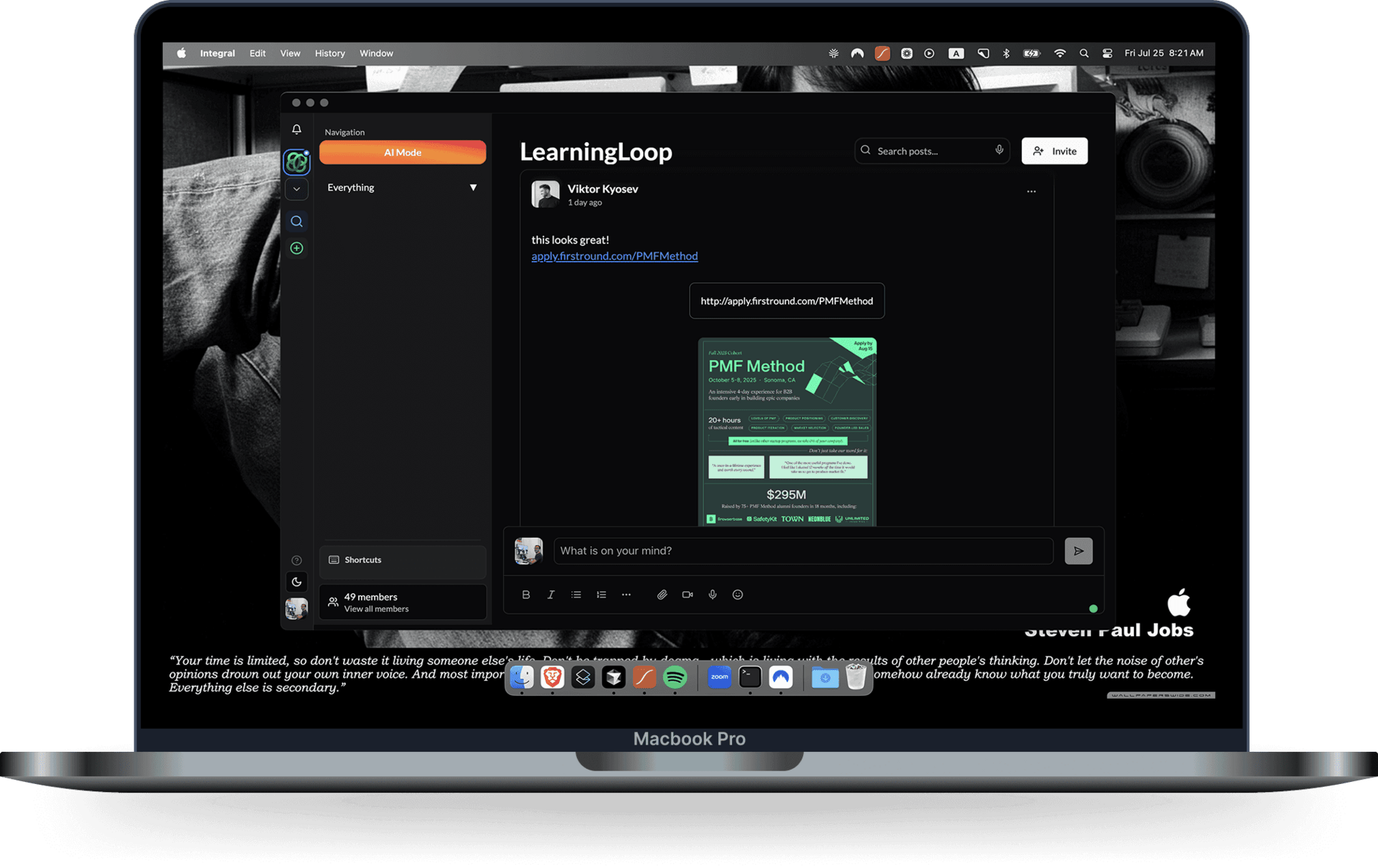
Integral (community platform)
Mistake 1: Not moving to San Francisco early enough
By not being in SF, I think my distance to my vision kept getting like further and further and further away.
Sina continued building Learning Loop, and later Integral, from Singapore even after committing to a venture-scale software platform.
❌ In hindsight, he realised he was operating under the assumption that location wouldn’t materially affect decision quality or fundraising once there was a product and users.
This turned out to be wrong.
🇺🇸 Being outside the core startup ecosystem reduced the speed and quality of feedback, weakened fundraising momentum at the exact moment Integral needed venture conviction, and limited exposure to founders and investors who had already run similar platform journeys.
Early signs were visible when fundraising became harder despite product progress and when internal conviction increasingly had to compensate for weaker external validation.
Mistake 2: Not hiring a great founding team at the beginning
Sometimes I hired way too fast. It took me like 2, 3 years of trial and error to learn this.
It became harder to build a core team after the product and mission were formed.
The underlying assumption was that people could grow into the level required as the company scaled.
🐌 In reality, this slowed execution, made Sina a bottleneck instead of creating leverage, and prevented the team from moving fast enough to hit the milestones needed to unlock more funding.
🚨 The warning signs showed up as Sina personally compensating for execution gaps, progress feeling harder than expected, and growing tension between what needed to be built and what the team could realistically deliver.
🧠 3 Lessons Learned
Lesson 1: Speed to decisions matters
When Sina reflected on Learning Loop, one thing kept coming up again and again: decisions took too long— especially the hard ones.
Hiring. Firing. Product direction. Platform bets.
🌮 Key Takeaways:
Decision latency compounds faster than bad decisions.
In communities, inaction is often worse than a wrong move because trust, engagement, and momentum decay quietly.
The goal isn’t perfect decisions — it’s shortening the loop between signal → action.
🛠️ Operator Playbook:
Create a “48-hour rule” for irreversible decisions
If a decision affects people, money, or roadmap, force a decision within 48 hours once enough signal exists.
Run kill-tests (not validation-tests)
For community or ed-tech products:
Kill a feature if usage <30% of active members after 14 days.
Kill a format (events, AMAs, cohorts) if re-attendance <50%.
Resource: Check out this book recommended by Sina → Thinking in Bets (Annie Duke)
It helps founders detach ego from decisions and act faster under uncertainty.
Lesson 2: Build the team before you build the product
✌🏻 Team here could mean your co-founder or early employees.
Why?
Because Sina built Learning Loop’s product and direction first… and only later realised the team he had couldn’t execute at the level the ambition required — especially once Integral turned the company into a platform play.
🌮 Key Takeaways:
“Good people” is not a useful bar. Good for what stage?
Community businesses tolerate generalists. Platforms punish them.
Hiring too fast + keeping people too long is a silent runway killer.
🛠️ Operator Playbook:
Define “stage-fit” roles (not generic roles)
Ask: What does excellence look like in the next 12 months — not today?
Apply the “bar test” quarterly
For every core role, ask → “If this person left tomorrow, would I fight hard to rehire them?”
Lesson 3: Geography is leverage
Sina mentioned one thing I’ll never forget.
He said San Francisco compressed feedback loops by orders of magnitude.
🌉 This lesson isn’t “move to SF or die”.
It’s this → Don’t underestimate how environment shapes decision quality.
🌮 Key Takeaways:
Geography determines the quality and speed of feedback.
Remote work doesn’t eliminate ecosystems — it just hides them.
For platform plays, location is part of strategy, not ops.
🛠️ Operator Playbook:
Match geography to ambition
Community-first, lifestyle business → flexible.
Platform, venture-scale → embed where the game is played.
Run a “feedback density audit”
Ask:
How many people around me have built what I’m trying to build?
How often do they challenge my thinking?
If you’re building a Slack/Discord alternative or learning platform, spend time where similar companies scaled (SF, NYC).
If moving isn’t possible:
Spend 4–6 weeks/year embedded (accelerators, hacker houses, co-living).
Build a personal advisory circle of operators who’ve shipped at scale.
🏆 That’s why I’m building Beyond Runway — a private, curated community for revenue-generating founders who learn fast, move faster, and win together.
We currently have 20 founders ($50K–$20M annual revenue) across AI, B2B SaaS, fintech, e-commerce, agencies, and tech-enabled services.
We’ll cap members at 50 founders. Join us here.
🔗 The Runway Insights
💰 Southeast Asia Funding Radar
Atome secures $345M syndicated debt facility for SEA growth (More)
Zeya Health secures $575K (Pre-Seed) to build AI-native infrastructure for healthcare providers (More)
Bluecopa raises $7.5M (Series A) to automate core enterprise finance workflows using AI (More)
Hupo raises $10M (Series A) to enable enterprises to coach and up skill thousands of sales and client-facing employees (More)
💃 Rate Today’s Edition
What'd you think of today's edition?Your feedback helps me create better content for you! |
That’s all for today
Thanks for reading. I hope you enjoyed today's issue. More than that, I hope you’ve learned some actionable tips to build and grow your business.
You can always write to me by simply replying to this newsletter and we can chat.
See you again next week.
- Admond
Disclaimer: The Runway Ventures content is for informational purposes only. Unless otherwise stated, any opinions expressed above belong solely to the author.
Reply