- The Runway Ventures
- Posts
- 🤯 Cambodia vs Grab: The Rise and Fall of Nham24
🤯 Cambodia vs Grab: The Rise and Fall of Nham24
How Cambodia’s first super-app proved the market — then got squeezed, absorbed, and erased by a regional giant.

Admond Lee
January 04, 2026

P.S. One The Runway Ventures campaign (newsletter + LinkedIn) typically drives 250+ qualified founder clicks that turn into leads and customers.
Hey Founders,
Welcome to The Runway Ventures — a weekly newsletter where I deep dive into failed startup stories to help you become the top 1% founder by learning from their mistakes with actionable insights.
Today’s story is about a homegrown Cambodian super-app that did everything right to win its market — until scale, capital, and trust turned its biggest strengths into its biggest constraints. Let’s get to it! 🚀
Today at a Glance:
☠️ 1 Failed Startup → Nham24
⚠️ 2 Mistakes → Fought a capital war while relying on local loyalty as the main shield
🧠 3 Lessons Learned → M&A is a trust migration problem
🔗 The Runway Insights → How to start a sales call
💰 Southeast Asia Funding Radar → Olea secures $30M (Series A) to accelerate innovation in global trade finance
☠️ 1 Failed Startup: Nham24

🚀 The Rise of Nham24
🇰🇭 Founded by Borima Chann in 2016, Nham24 was Cambodia’s homegrown on-demand delivery and services platform built for locals.
🕺🏻 Founders’ Story
Borima Chann didn’t start Nham24 as a “startup idea” — it started as pure frustration.
😖 After 20+ years in big corporates like Coca-Cola and Hello Axiata, he was in his 40s, juggling work and family, and wasting hours in Phnom Penh traffic just to get food.
He saw that delivery apps existed, but they were built for expats — not for everyday Cambodians or local eateries.
So in 2016, he built Nham24 — a simple, Khmer-first app to bring local food to people, not people to food.
What began as a personal pain point quietly became Cambodia’s first homegrown super-app.
The Problem — 🚦 Everyday life in Cambodian cities was inefficient because getting food and services meant fighting traffic, cash-only systems, and offline merchants.
Going out for lunch or errands could take 1–2 hours due to traffic and poor infrastructure
Existing delivery services were built for expats, not everyday Cambodians
Local restaurants and street-food vendors were digitally invisible and dependent on foot traffic
The Solution — 🛵 Nham24 built a Khmer-first, local super-app that brought food, goods, and services to people by:
Connecting customers, local merchants, and riders into one delivery ecosystem.
Enabling small merchants to sell online without tech skills or upfront investment.
Starting with cash-on-delivery, then gradually introduced digital payments to fit local behaviour.
🇰🇭 That model sounds normal now, but in Cambodia then? It was a huge leap.
What if food comes to you… instead of you wasting your life in traffic?
 | At first, Nham24 started small — just a basic food delivery service partnering with local restaurants.
|
🚀 Nham24’s popularity exploded as smartphone use grew across the country over the next few years. By the time the Covid-19 pandemic hit, the app was a lifeline for locals to get their daily meals.
In June 2018, Nham24 landed a crucial investment from the Smart Axiata Digital Innovation Fund (SADIF) — the venture arm of Cambodia’s leading telco.
🔥 In June 2019, they set their sights on becoming a true super-app.
Nham24 introduced a whole slate of new services:
Grocery deliveries
Online shopping marketplace
Parcel delivery
… and even a ride-hailing service called Nham24 Taxi
🏔️ At its peak, Nham24:
Became “Cambodia’s first super-app”
Had over 1 million registered users by 2024
Tens of thousands of orders flowing through and were generating income for thousands of delivery drivers and merchants across multiple provinces
And that was when things got interesting…
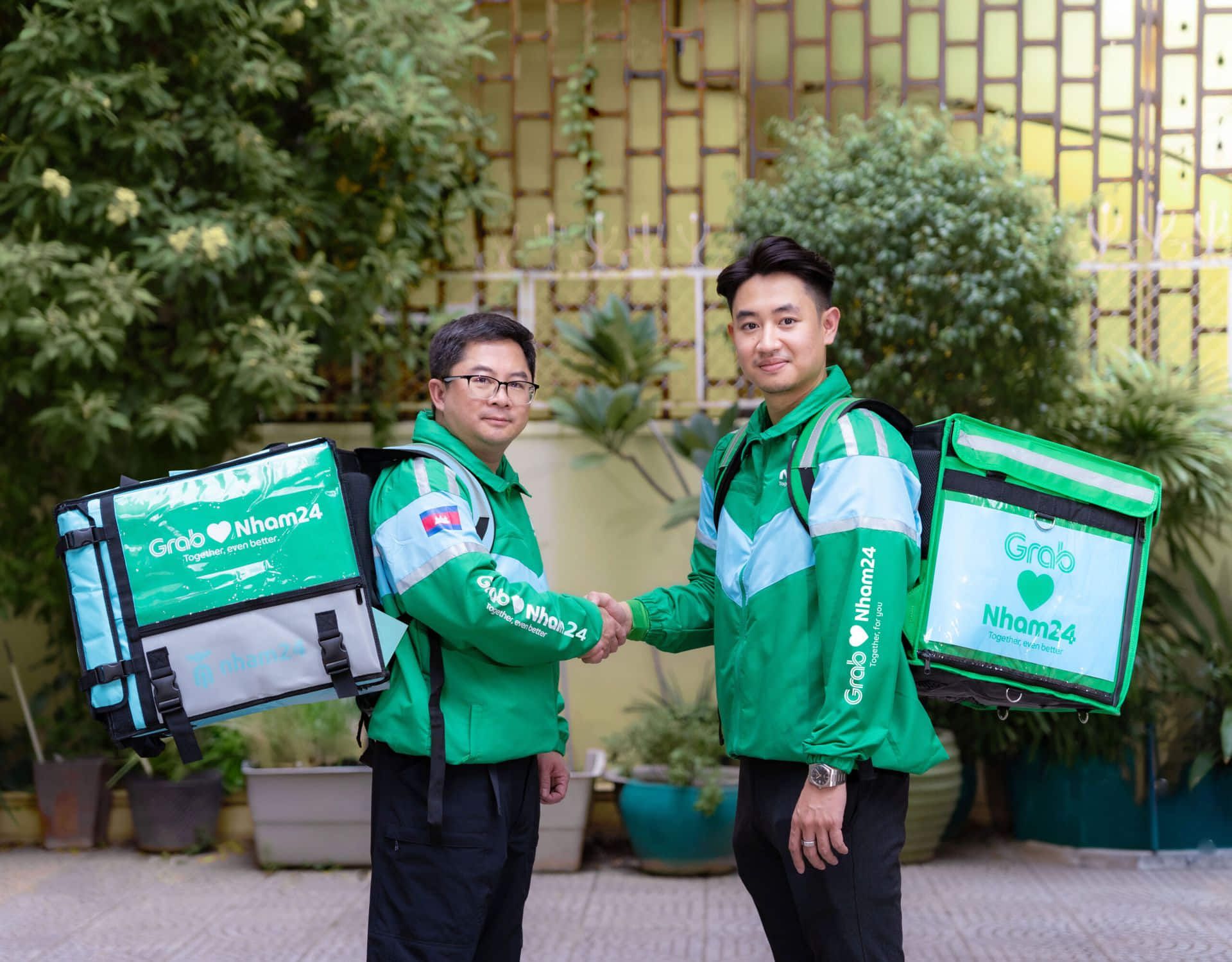
👀 Because Ngam24 caught the attention of Southeast Asia’s biggest super-app — Grab. Grab decided that instead of competing with Nham24, it would be smarter to partner up. In December 2024, Grab acquired Nham24’s operations in Cambodia 🤯
🫡 The deal was hailed as a win for the Cambodian startup ecosystem at the time. Tech in Asia even called it “Cambodia’s first tech exit”, noting how Nham24 had scaled into a super-app before Grab or Foodpanda ever showed up on the scene.
📉 The Fall of Nham24
But if you’ve been around startups long enough, you know what that often means:
We’ll keep the logo around… until migration is done.
Nham24 didn’t “die” like a dramatic bankruptcy with empty offices overnight.
Even more brutal, it got squeezed by giants… then absorbed.
📌 Here’s what happened to Nham24:
This is a significant milestone for a local startup like Nham24 to inspire future local tech entrepreneurs and to attract international investments into Cambodia’s tech startup scene.
🦸🏻♂️ Road to becoming a super-app
2016 — Nham24 was founded by Borima Chann in Phnom Penh, launching Cambodia’s first food delivery website and mobile app.
Jun 2018 — 💰 SADIF (Smart Axiata Digital Innovation Fund) acquired a minority stake in Nham24.
Jun 2019 — 🔥 With fresh funding, Nham24 expanded beyond food toward a broader service offering (super-app direction).
Nov 2019 — Foodpanda launched in Cambodia, later expanding nationally.
2020 — 📈 The Covid-19 pandemic drove a huge spike in demand for delivery services.
Nham24’s user base surged as lockdowns forced people to rely on online deliveries.
The company experienced rapid growth, handling a record number of orders during this period.
Jul 2020 — Visa + Nham24 launched “card-on-file” to improve online payment experience and safety.
Aug 2022 — Grab officially launched GrabFood in Phnom Penh, backed by major promotions and rollout plans.
By now, Nham24 was competing head-to-head with two international giants (Grab and Foodpanda) in food delivery.
23 Apr 2024 — Nham24 surpassed 1 million users, positioning itself as Cambodia’s leading homegrown super-app.
30 Dec 2024 — Grab completed acquisition of Nham24’s operations in Cambodia, after regulatory approval from Cambodia’s Competition Commission.
Both apps promised to operate independently “for the foreseeable future”.
⛳️❌ The loss of independence

20 May 2025 — 👀 Post-acquisition, reports said Grab and Nham24 were moving toward a unified platform (integration started becoming explicit in public coverage).
Jun 2025 — 🔗 Account linking / migration began (Nham24’s own FAQ said accounts were transitioned in batches; it also stated the standalone app would discontinue services after 30 June 2025).
1 Jul 2025 — 🙏🏻 The Nham24 app was officially discontinued and fully integrated into Grab.
Users who opened Nham24 were redirected to Grab, and Nham24’s branding began to disappear from the market.
Grab absorbed Nham24’s operations, effectively ending Nham24’s run as an independent platform.
30 Sept 2025 — 🫡 Go24 (Cambodia) Co. Ltd., the company behind Nham24, formally ceased operations (approximately a decade after its founding).
By this date, all remaining Nham24 services or branding have been phased out.
The Nham24 era officially came to a close, marking the end of Cambodia’s first super-app story.
So yeah — Nham24 didn’t collapse because the founders were frauds or because the product was trash.
😭 It fell because:
It proved the market…
then the giants arrived…
then the market consolidated…
and the local champion got folded into the regional empire.
Even the user sentiment shows it. Some people were straight-up angry about losing Nham24 and being forced onto Grab, saying they’d switch to foodpanda instead.
🇰🇭🫡 In the end, Nham24 achieved something historic — it paved the way for Cambodia’s startup ecosystem — even if it couldn’t remain a standalone giant forever.
Want to learn more about Nham24’s acquisition?
⚠️ 2 Mistakes
Mistake 1: Fought a capital war while relying on local loyalty as the main shield
When foodpanda entered in late 2019 and GrabFood followed in 2022, Nham24 stayed in the fight. Walking away wasn’t an option — it was the local champion, trusted by users, merchants, and riders.
The bet was that local knowledge, brand trust, and early mover advantage could offset competitors with deeper pockets.
💸 In reality, the battle wasn’t about who understood Cambodia better — it was about who could subsidise longer.
Cambodian users were price-sensitive. Merchants were listed on multiple apps. Riders followed incentives hour by hour.
💸💸💸 Over time, Nham24 had to spend more just to hold the same ground. Growth masked weakening leverage, and strategic options narrowed. The business didn’t collapse — it got cornered.
Mistake 2: Underestimated how fast an acquisition can erase trust once integration begins

🤝🏻 When Grab acquired Nham24 in December 2024, the message was reassuring: partnership, independence, continuity. For founders and investors, the deal solved a capital and competition dead end.
But acquisitions don’t end at signing — they begin there.
In 2025, users were asked to migrate accounts, apps redirected to Grab, services degraded, and deadlines appeared to withdraw balances.
To customers, it didn’t feel like evolution. It felt like being pushed out of something familiar.
What leadership underestimated was that Nham24’s brand wasn’t just a logo — it was the trust layer.
People trusted it because it felt local, familiar, and theirs.
👋🏻 Once that identity disappeared too quickly, users didn’t smoothly migrate. They disengaged, complained, or left altogether.
The integration may have made sense strategically, but operationally and emotionally, it felt abrupt. And by the time the app officially shut down later in 2025, much of the goodwill that once protected Nham24 had already evaporated.
🧠 3 Lessons Learned

Lesson 1: When the market becomes subsidy-driven, your true KPI is “retention without discounts”
Here’s the uncomfortable truth Nham24 ran into → once foodpanda and Grab started playing the promo game, the market shifted from “who’s best” to “who’s cheapest this week”.
✌🏻 Low switching cost + visible discounts = conditional loyalty. If you can’t hold users when you stop paying them, you’re renting demand.
🌮 Key Takeaways:
Growth during a subsidy war is often a mirage — it’s spending, not strength.
The only honest metric is: do users stay when incentives go to zero?
🛠️ Operator Playbook:
Run a “No-Promo Cohort Test”
Take 10–20% of users and run zero discounts. Compare retention + frequency against promo cohorts.
Do a quarterly “Capital Asymmetry Review”
Compare your runway vs competitors’ ability to outlast you. If Grab can burn 10x longer, don’t pretend tactics will save you.
Use 7 Powers to check if you have a moat beyond spending (switching costs, cornered resources, network effects).
Business model lens (super-app reality)
Delivery platforms are often negative-margin early. Long-term profit usually comes from density + higher-margin layers (ads, fintech, subscriptions).
Grab can cross-subsidise from rides/fintech + regional scale.
Foodpanda has parent-company backing and global playbooks.
If you’re a local champion, you must find a structural edge that’s not “we can discount too”.
Lesson 2: M&A is a trust migration problem
Nham24’s acquisition didn’t “kill the product.” The integration experience killed trust.
Because people don’t migrate like data. The moment users feel forced — redirects, deadlines, brand erasure — some will churn out of spite, not inconvenience.
😡 That’s why the Reddit complaints mattered: they were signals of agency loss (“sold out”, “I hate Grab”, “moving to foodpanda”).
🌮 Key Takeaways:
Trust breaks before churn shows up in dashboards.
Forced migration doesn’t just lose users — it can push them straight into the arms of the #2 player.
🛠️ Operator Playbook:
Opt-in before force (next 60–90 days)
If you’re migrating users (M&A, rebrand, major platform shift), run dual systems and measure voluntary migration rate. If users won’t choose it, forcing it will create backlash.
Track “Sentiment Velocity” weekly, not just churn
Lesson 3: Local advantage decays faster than you think
🇰🇭 Early on, Nham24’s biggest strength was being deeply local. Local merchants trusted them. Local users felt represented. The brand felt Cambodian, not imported.
That advantage was real — but it was also time-limited.
Because “local” is not a moat by itself. It’s a head start. And head starts expire unless you convert them into something competitors can’t easily copy.
Grab and foodpanda didn’t understand Cambodia better on Day 1. But they didn’t need to. Over time, data, incentives, and capital let them close the local knowledge gap faster than Nham24 could close the capital gap.
🌮 Key Takeaways:
Local insight helps you enter a market, not defend it long-term.
Global players don’t need to be local — they just need to be good enough plus cheaper or more reliable.
🛠️ Operator Playbook:
Translate “local knowledge” into hard lock-in
Ask: What do we know about this market that we can encode into product, contracts, or workflows?
Examples:
Exclusive merchant contracts (even short-term or category-based)
Custom tooling for local merchants that competitors won’t prioritize
Embedded workflows (credit, inventory, POS-lite features)
Build switching costs where they actually matter
In super-apps, switching costs rarely come from the consumer UI.
They come from:
merchant tools
rider income predictability
stored value / credit / operational dependencies
While Nham24 competed mainly on the consumer side, Grab competed by locking in supply + capital + data.
🔗 The Runway Insights
💰 Southeast Asia Funding Radar
Olea secures $30M (Series A) to accelerate innovation in global trade finance (More)
Saladin raises funding (Series A) to build tailored and embedded B2B2C insurance brokerage and multi-channel distribution solutions for partner platforms (More)
Pyxis bags $10M to help companies adopt electric maritime vessels (More)
💃 Rate Today’s Edition
What'd you think of today's edition?Your feedback helps me create better content for you! |
That’s all for today
Thanks for reading. I hope you enjoyed today's issue. More than that, I hope you’ve learned some actionable tips to build and grow your business.
You can always write to me by simply replying to this newsletter and we can chat.
See you again next week.
- Admond
Disclaimer: The Runway Ventures content is for informational purposes only. Unless otherwise stated, any opinions expressed above belong solely to the author.
Reply