- The Runway Ventures
- Posts
- 🤯 Why Ula Shut Down With $50M Still in the Bank
🤯 Why Ula Shut Down With $50M Still in the Bank
How Indonesia’s high-flying B2B wholesale startup raised $140M, served 100,000 warungs, and still couldn’t make the business model work.

Admond Lee
March 29, 2026

P.S. One brand ran a single The Runway Ventures campaign and generated 250+ founder clicks that turned into inbound leads.
Hey Founders,
Welcome to The Runway Ventures — a weekly newsletter where I deep dive into failed startup stories to help you become the top 1% founder by learning from their mistakes with actionable insights.
A founder friend told me recently:
Hiring across Southeast Asia sounds smart… until you realise you have no idea what a “fair” salary looks like in Indonesia, Vietnam, or the Philippines.
That’s where founders get burned:
overpaying for roles they could hire cheaper elsewhere
underestimating payroll, contracts, and compliance headaches
building the wrong regional team structure too early
The SEA Talent & Hiring Guide 2026 by Glints breaks this down with country-by-country hiring playbooks and salary benchmarks based on real roles and placements across Southeast Asia — see the full guide here.
Today’s story is about Ula, the Indonesian startup that raised big to fix warung supply chains — then shut down with US$50 million still in the bank. Let’s get to it! 🚀
Today at a Glance:
☠️ 1 Failed Startup → Ula
⚠️ 2 Mistakes → Solving too many problems at once
🧠 3 Lessons Learned → Build for survival in bad markets (not just growth in good ones)
🔗 The Runway Insights → How to find and vet a cofounder
💰 Southeast Asia Funding Radar → Amity raises $100M (Series D) to advance vertical AI models
🤝🏻 Together with Airwallex
Your all-in-one finance stack

One mistake I see founders make all the time:
They ignore their finance stack.
It usually looks like this — Stripe for payments, Wise for transfers, Aspire for cards, Xero for accounting.
It works… until you start hiring globally, paying vendors overseas, and juggling multiple currencies across different dashboards.
That’s why many startups switch to Airwallex — one platform to collect global payments, manage multi-currency funds, pay vendors worldwide, and control team spend.
☠️ 1 Failed Startup: Ula
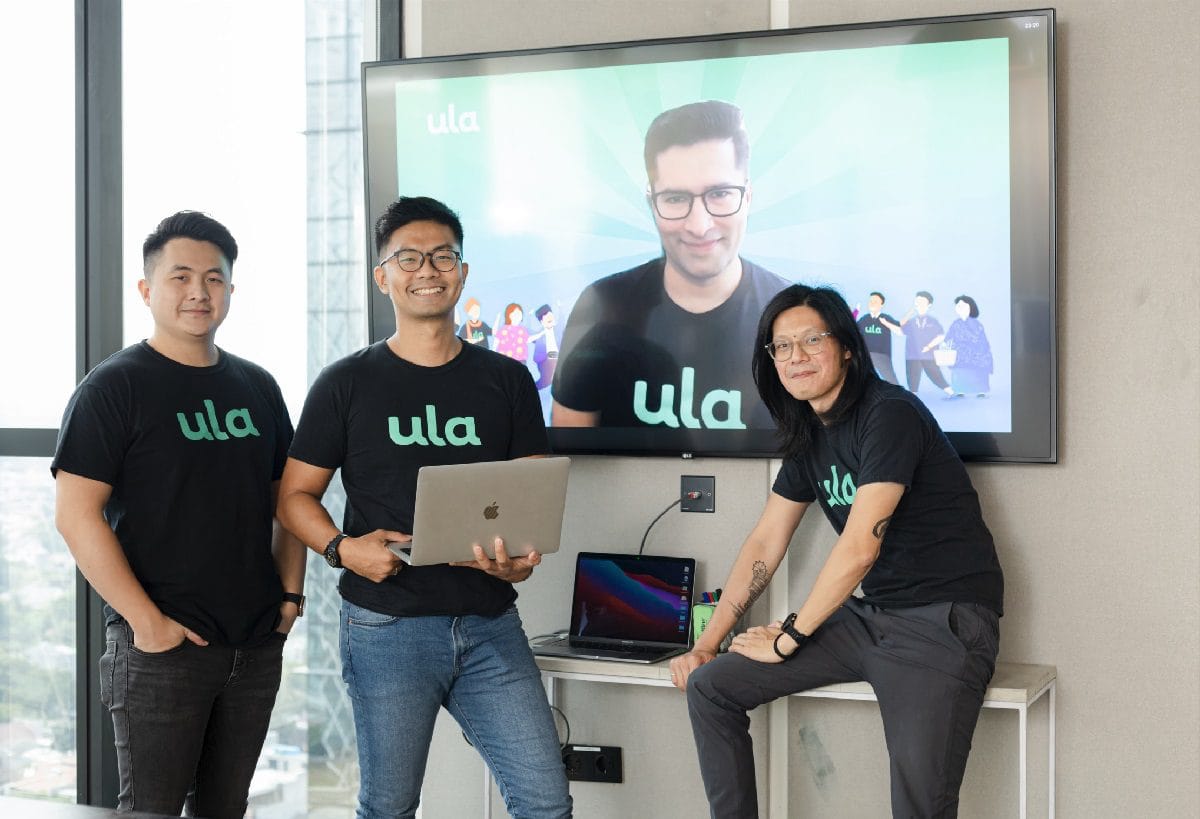
Ula’s Founders (left → right) Riky Tenggara , Derry Sakti, Nipun Mehra, Alan Wong
🚀 The Rise of Ula
🇮🇩 Founded by Nipun Mehra (CEO), Alan Wong (CTO), Derry Sakti (CCO), and Riky Tenggara (COO) in 2020, Ula was an Indonesian B2B wholesale e-commerce platform that helped warungs order inventory, access working capital, and manage stock more easily.
🕺🏻 Founders’ Story
Ula started when Nipun Mehra spent months in Indonesia talking to warung owners and saw how broken their supply chain was.
In 2020, he teamed up with Alan Wong, Derry Sakti, and Riky Tenggara to build Ula, a platform that helped small shops order inventory more easily and access working capital.
🔓 The early bet was simple → fix the backend for warungs, and you unlock a massive retail market.
The Problem — 👕 Warungs in Indonesia had to deal with a messy, fragmented supply chain — unreliable wholesalers, inconsistent prices, limited product selection, and little access to working capital.
Many owners even had to leave their shops during business hours just to restock, which meant lost sales.
The Solution — 💰 Ula built a B2B wholesale platform that let warungs order inventory through an app, get it delivered to their doorstep, and access pay-later / working-capital financing to restock more easily.
🇮🇩🤝🏻 In short, Ula was like a digital wholesaler and financing partner for Indonesia’s warungs.
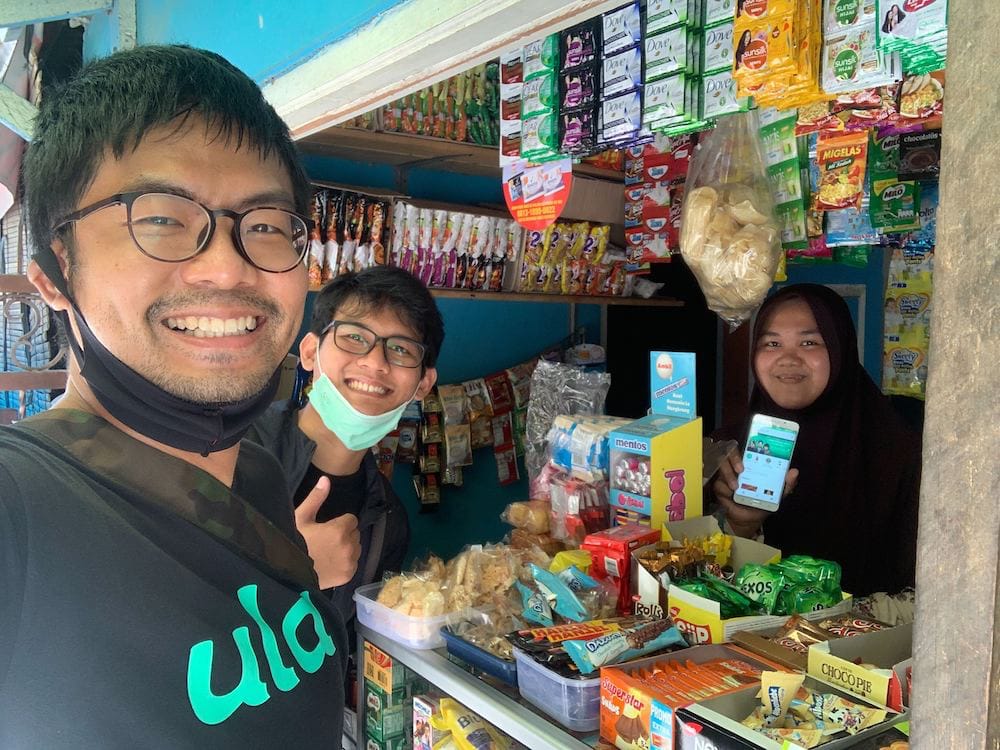 | 🦠 Ula launched in January 2020, right as the pandemic began reshaping buying behaviour and supply chains. That timing, weirdly enough, helped. 🛵 Lockdowns made traditional wholesale trips harder, so a service that brought goods to shops suddenly became a lot more valuable. |
💰 Just 5 months after launch, Ula raised a $10.5 million (Seed) led by Sequoia India and Lightspeed India. By January 2021, it raised another $20 million in Series A, serving more than 20,000 stores (mostly in East Java).
💰💰 In October 2021, Ula announced an $87 million (Series B) co-led by Prosus Ventures, Tencent, and B Capital, with Jeff Bezos joining via Bezos Expeditions.
Suddenly, everyone paid attention to Ula. And the traction was crazy.
Ula said at the time that it had grown 230x in under 20 months, was offering more than 6,000 products, and was serving more than 70,000 traditional retail stores.
🤯 Then, guess what? A month later, it extended the round by another $23.1 million from Tiger Global and Binny Bansal, bringing total Series B funding to around $110 million.
🔥 At its peak, Ula:
served 100,000+ warungs across East, West, and Central Java
processed around 500,000 orders per month
hit a $300 million sales run rate
raised ~$140 million in total
That was the high point. That was the dream — building the infrastructure layer for millions of small retailers, own the supply chain, layer in credit, and create a monster business.
📉 The Fall of Ula
But then the story flipped.
Ula looked unstoppable on the way up. But underneath the growth was a hard business.
🩸 Thin margins, heavy logistics, and a model that needed constant capital to survive.
When the funding market turned, everything started to crack. Layoffs hit, operations were paused, and by late 2023, Ula shut down its core business — even with around $50 million still in the bank.
📌 Here’s what happened to Ula:
It’s the single hardest thing to do as an individual to be emotionally attached to something and yet take a dispassionate view to say that some things just need to be done.
👕🎽 The Warung Days

2019 — Nipun Mehra spent months in Indonesia walking markets and talking to small retailers to understand the problems inside traditional trade.
Jan 2020 — Ula launched in Indonesia and shipped its first order.
10 Jun 2020 — 💰 Raised $10.5 million (Seed) led by Sequoia India and Lightspeed India.
Jun 2020 — The business had grown 10x since launch while still in private beta.
28 Jan 2021 — 💰 Raised $20 million (Series A) led by B Capital Group and Quona Capital, serving 20,000+ stores.
May 2021 — Ula was working with 30,000+ traditional retailers, mainly in East Java, with some presence in Central and West Java.
Oct 2021 — 💰 Announced $87 million (Series B) co-led by Prosus Ventures, Tencent, and B Capital, with Bezos Expeditions participating, offering 6,000+ products and serving 70,000+ stores.
Nov 2021 — 💰 Extended Series B by $23.1 million from Tiger Global and Binny Bansal, bringing the Series B total to about $110 million and total funding to $140 million+.
Late 2021 — 🏔️ Ula reached its high-growth phase.
Served 100,000+ warungs, processed 500,000 orders per month, and hit a US$300 million sales run rate at peak.
🚶🏻♂️ Ula’s founders walked away with $50M still in the bank

2022 — 🌎 Global funding conditions worsened as rates rose and startup markets tightened.
Ula’s founder later realised the company’s capex-heavy model was in trouble without fresh capital.
Nov-Dec 2022 — 🪓 Ula laid off 134 employees, around 23% of staff due to market turbulence, commodity price volatility, and tough economic conditions.
2022 — 🫡 Despite pressure, Ula generated $121 million in revenue, but the economics remain difficult.
Oct 2023 — 📉 Ula announced it’d transition out of inventory-led FMCG distribution, pause operations for several months, and conduct more layoffs.
Late 2023 — After layoffs, pivots, and a failed M&A process, Ula shut down core operations.
10 Feb 2025 — 🙏🏻 Ula was winding down officially and returning about 30% of total capital raised to investors, with some given the option to roll into Mehra’s next venture. The company reportedly still has about $50 million left.
29 Jul 2025 — DealStreetAsia reported Ula’s last investors exited the cap table, leaving only founders and a new entity as the company completed its final legal restructuring.
🫡 What made Ula’s ending so unusual was this → they shut it down with around $50 million still in the bank.
Instead of burning the last dollar chasing a comeback, the founders chose to return part of the capital to investors and walk away. It showed that Ula wasn’t a fake business with no demand — the problem was real, but the model had become too hard to sustain.
In the end, the founders didn’t lose because they ran out of vision. They stopped because the math no longer worked.
Want to learn more about Ula’s downfall?
⚠️ 2 Mistakes
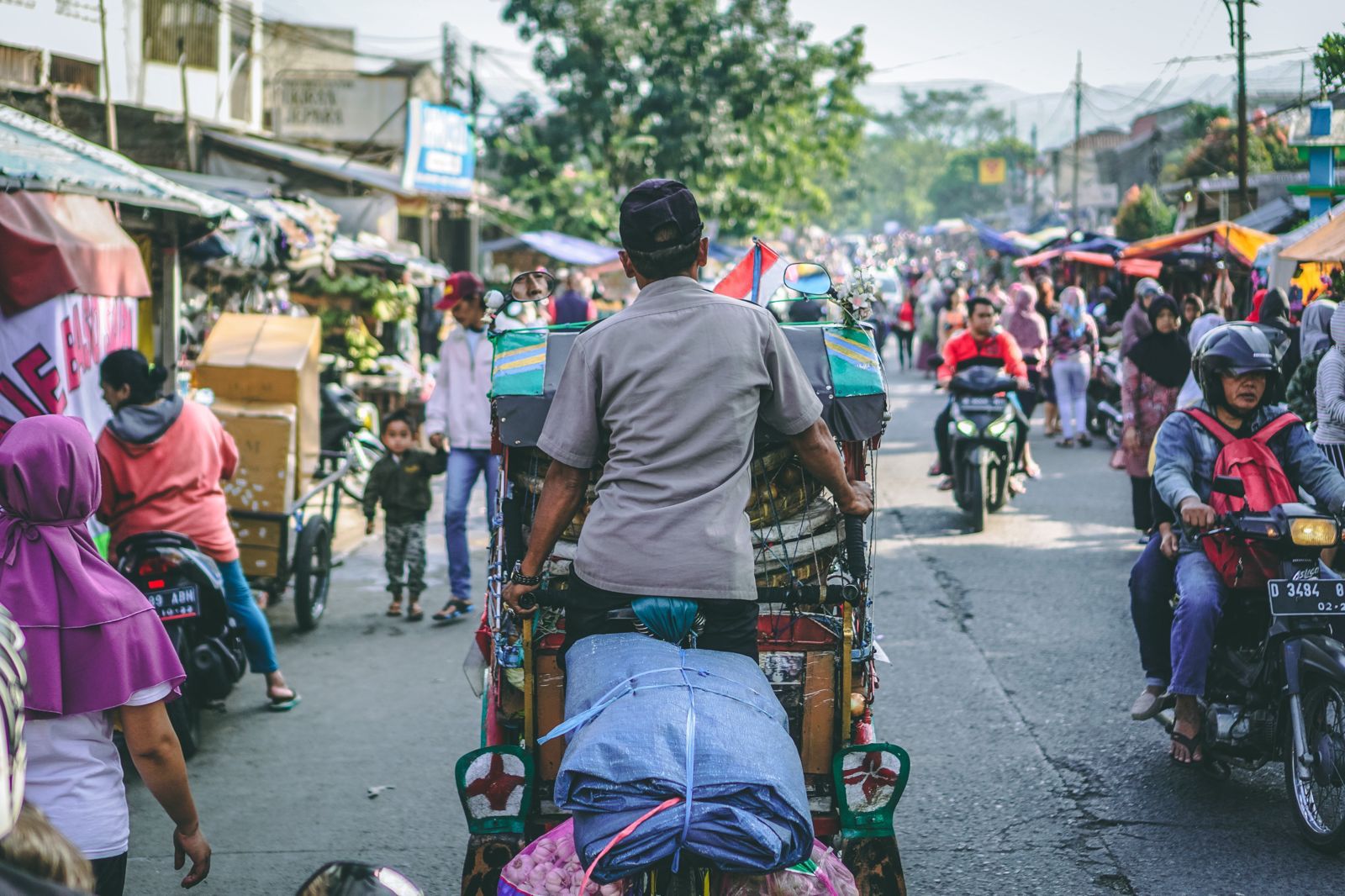
Mistake 1: Solving too many problems at once
Ula wasn’t just fixing one problem.
⚠️ They were trying to fix sourcing, delivery, inventory, and credit for millions of small retailers — all in one go. Sounds great in a pitch deck. Looks like a complete ecosystem. But operationally, that’s brutal.
Because each of those is already a hard business on its own. Logistics is hard. Commerce is hard. Lending is hard. Now stack them together and you don’t get one business — you get 3-4 hard businesses glued together. That means if one part gets shaky, the whole thing starts wobbling.
💸 Besides, the machine needed warehouses, inventory, logistics, people, and working capital to keep moving. And that machine burned cash every day.
That’s what made Ula look powerful from the outside, but fragile on the inside. The company had too many moving parts, too early.
Execution had to be great across everything, all at once.
Mistake 2: Scaled on hope that capital would stay easy
Ula raised fast, expanded fast, hired fast, and pushed hard into growth. And during the boom years, that looked like the right move. Money was available, investors loved growth, and the narrative was strong.
🤑 But if you strip everything down, the business was still relying on one huge assumption:
Capital would keep showing up long enough for the economics to work later
That assumption broke.
When the market turned in 2022, Ula suddenly had to face the business without the safety net. And that’s when the layoffs, pullbacks, pivots, and M&A talks started.
🤔 Did Ula raise too much capital, causing them to have lack of clarity in terms of what “bets” to focus on? I don’t know. But thinking that capital would stay easy to get is quite a risky assumption to bet on.
🧠 3 Lessons Learned
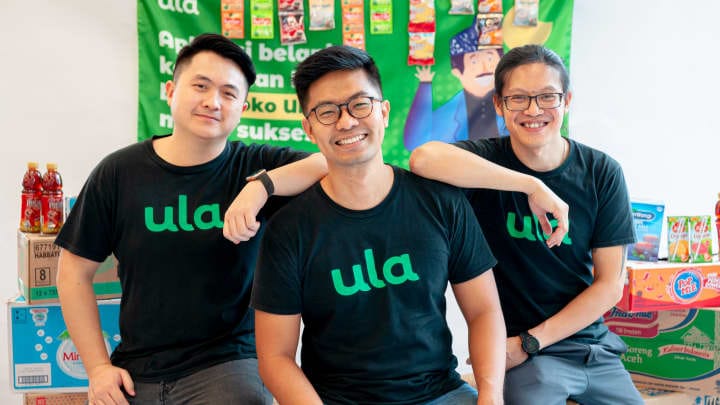
Lesson 1: Dominate a wedge before building the whole ecosystem
Ula wasn’t just solving sourcing. It was solving sourcing, logistics, inventory reliability, and credit — all at once.
📈 You need to be ambitious. But you have to sequence your ambition. Means you need to know when to do what and in what order, which will significantly improve your chance of success.
🌮 Key Takeaways:
Dominate your wedge first, before dominating the whole ecosystem.
Every new product line or service layer should deepen the core, not distract from it.
The right question is not “What else can we add?” It is “What’s the next layer that becomes easier because the current one already works?”
🛠️ Operator Playbook:
✍🏻 Define your wedge in one sentence
You should be able to say → “We are the best at helping [specific customer] do [specific job] with [specific advantage].”
☝🏻 Pick one proof metric for the wedge
Choose one metric that proves the wedge is real.
For B2B commerce, good wedge metrics include:
60-day or 90-day repeat purchase rate
Average orders per active merchant
Contribution margin by cohort
😎 Add layers only when the core unlocks them naturally
Never add a second hard business until the first one is economically viable.
Lesson 2: Build for survival in bad markets (not just growth in good ones)
🚨 Never assume that the capital would stay available long enough for your economics to eventually work.
Probably the biggest flex you can have as a founder isn’t how much money you’ve raised from investors, but how profitable you can get with/without investors.
The profitable confidence is priceless.
🌮 Key Takeaways:
A company is only healthy if it can survive a change in external conditions.
Fundraising can hide weak economics for a while, but it cannot fix them.
The best founders don’t just ask, “How fast can we grow?” They ask, “What happens if the market turns next quarter?”
🛠️ Operator Playbook:
🥶 Run a “funding winter” drill every quarter
Ask, “If fundraising disappears for 12–18 months, what breaks first?”
Rebuild your plan using only existing cash flow + current bank balance.
🙏🏻 Protect the core, not the story.
In bad markets, stop funding side bets, expansion markets, and “strategic” projects that look good in decks but don’t strengthen the core engine.
Lesson 3: Don’t confuse control with advantage
Control is not the same thing as advantage.
Sometimes it just means you’re carrying more weight than the business can economically support.
🌏 That’s the deeper lesson for B2B e-commerce and wholesale marketplaces in Southeast Asia → before you “own the stack”, ask whether the stack creates real economic leverage or just operational burden.
🌮 Key Takeaways:
In low-margin categories, an asset-heavy model can make growth look stronger than it really is.
The question is not “Can we control this layer?” The real question is “Does controlling this layer improve margins or retention enough to justify the cost?”
🛠️ Operator Playbook:
🧪 Stress-test your moat
If your edge disappears the moment you stop subsidising delivery or inventory, that’s not a moat.
Use the 7 Powers lens to ask whether you actually have scale economies, switching costs, process power, or just more operational exposure.
📈 Set a margin floor for expansion
Before launching a new city, category, or warehouse, define the minimum numbers required:
minimum gross margin %
max delivery cost per order
max CAC payback
minimum orders per route / merchant density
This prevents growth teams from expanding based on hype instead of economics.
🔗 The Runway Insights
💰 Southeast Asia Funding Radar
Amity raises $100M (Series D) to advance vertical AI models (More)
Virdalis raises $700K (Pre-Seed) to develop protein from duckweed (Wolffia globosa) for the animal feed industry (More)
Tazapay secures $36M (Series B) to scale global payment infrastructure (More)
Plum raises $20.6M (Series B) to scales its insurance and healthcare platform (More)
💃 Rate Today’s Edition
What'd you think of today's edition?Your feedback helps me create better content for you! |
That’s all for today
Thanks for reading. I hope you enjoyed today's issue. More than that, I hope you’ve learned some actionable tips to build and grow your business.
You can always write to me by simply replying to this newsletter and we can chat.
See you again next week.
- Admond
Disclaimer: The Runway Ventures content is for informational purposes only. Unless otherwise stated, any opinions expressed above belong solely to the author.
Reply